Strategy Byte - Week 61 The Journey so Far - Part 1

Table of Contents
- The Journey
- The Why
- Competitive Advantage
- Customers
- Competitive Landscape
Recap
The Journey

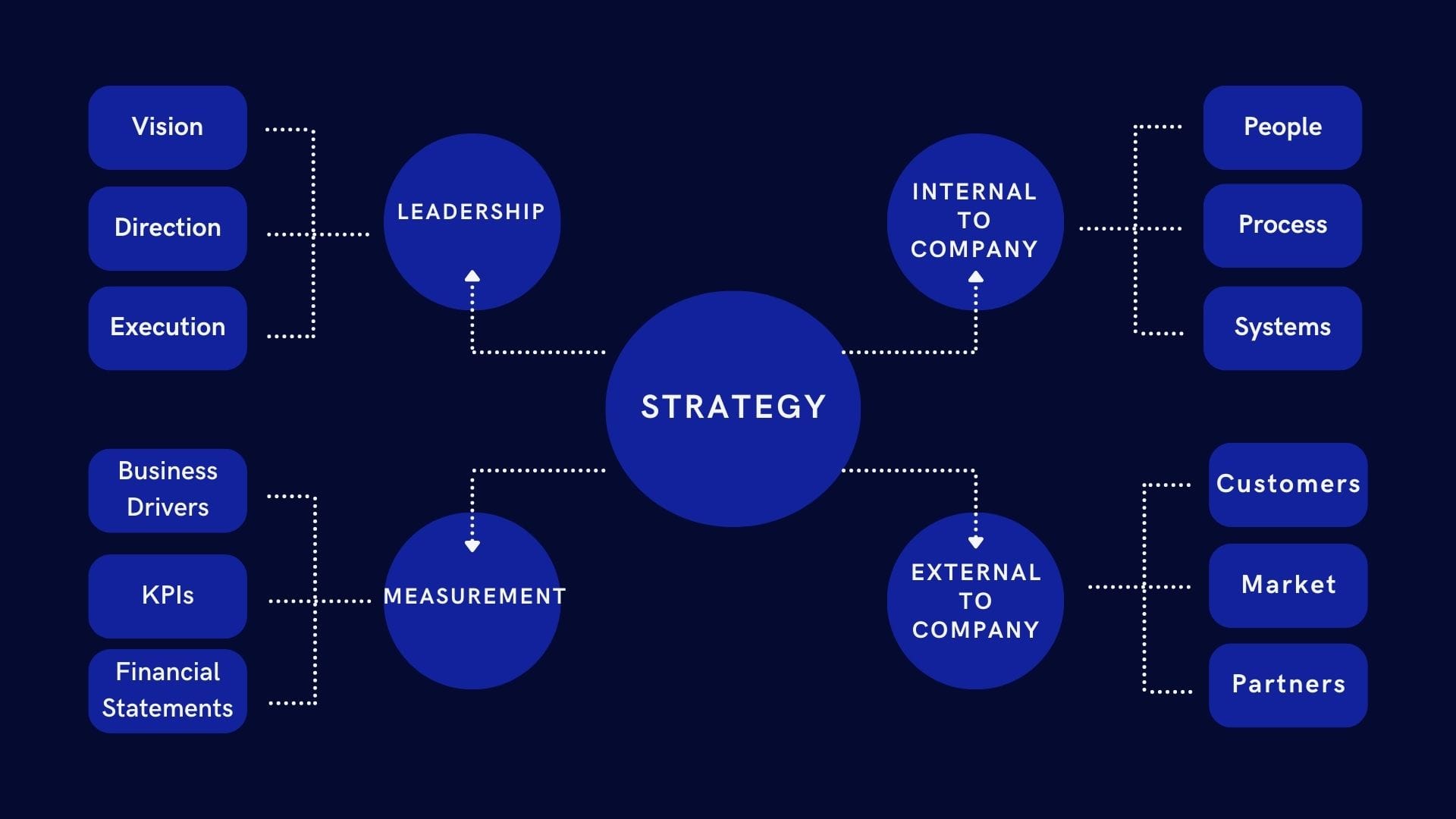
We started our journey to understand strategy together with a framework based on patterns I made out from books, podcasts or articles I consumed. I grouped these concepts under :
- Concepts on Leadership
- Concepts - Internal to Company
- Concepts - External to Company
- Measurement
The above were further broken down as :
Concepts on Leadership
In any organization, it is the CEO who owns the strategy & drives it with his/her management team.
- Vision
- Direction
- Execution
Concepts - Internal to Company
Strategy implementation or pivots involves changes within the organization across:
- People
- Process
- Systems
Concepts - External to Company
Strategy cannot be created or implemented in isolation. It has to be done in conjunction with :
- Customers
- Market
- Partners
Measurement
No strategy is complete if progress towards achievement cannot be measured & tracked. Understanding the below helps us with this part :
- Business Drivers
- KPIs
- Financial Statements
Visualizing the above :
The Why
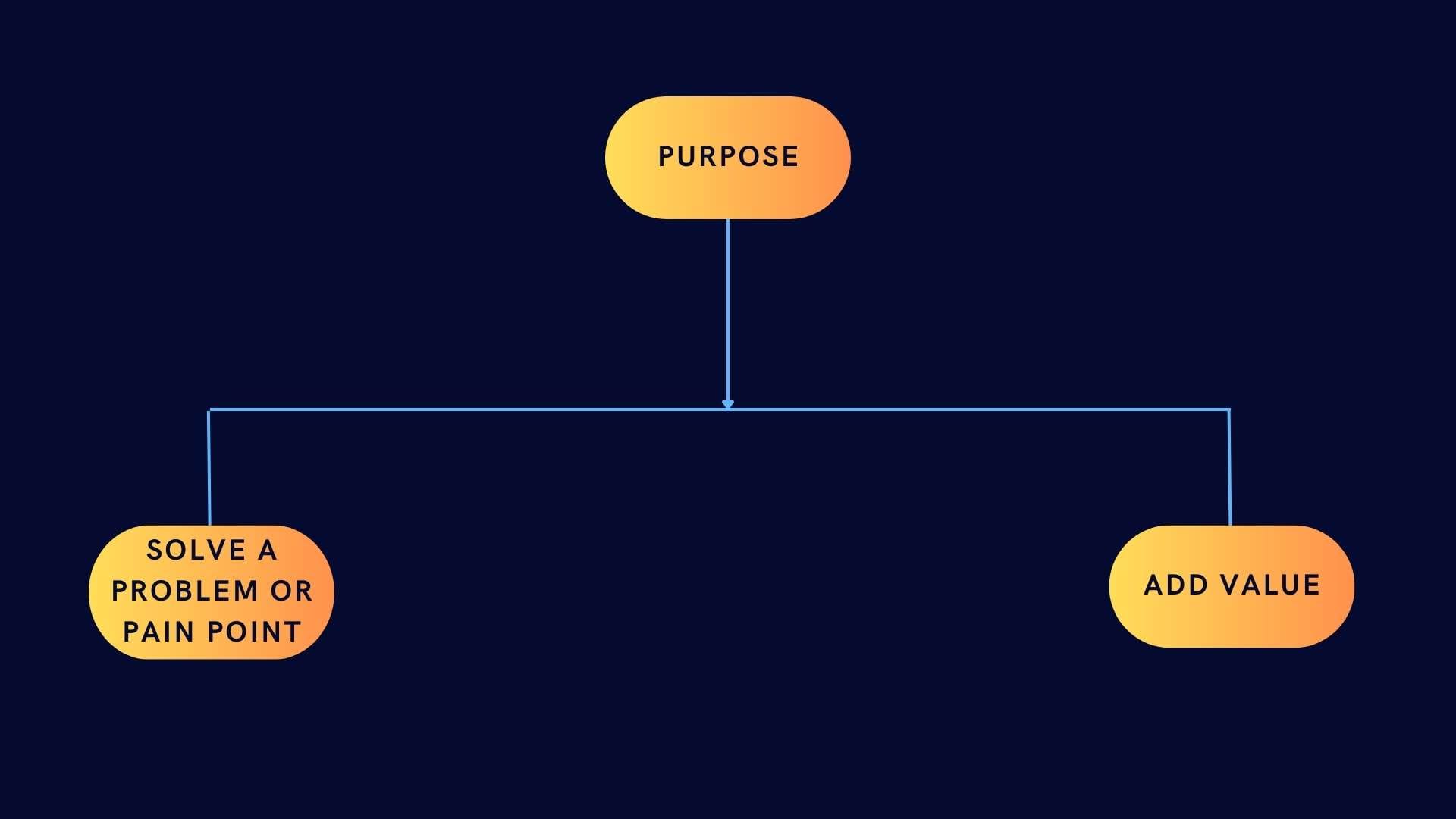
Any strategy (or our life!!) has a WHY - The core purpose driving everything. Roger L Martin calls it the Winning Aspiration & is the first box in his Strategy Choice Cascade.
A winning aspiration should be something which the company intends to do uniquely
- by creating something which solves a problem or
- that adds value to a current situation
The key word here is "uniquely". What does a company have which is unique & is a differentiating factor from other companies.
Competitive Advantage
After we zero in on the core purpose or a problem, what should we do next? The next obvious decision point is :
- Where to Compete &
- How are we going to win in the chosen "where to compete" field?
(Source : Playing to Win)
Before we get into that, we need to consider our competitive advantage in the area where we decide to compete so that we can chose how to win there. I mentioned this on a personal level too in my 2025 year end post as to using our unique characteristics to achieve our goals.
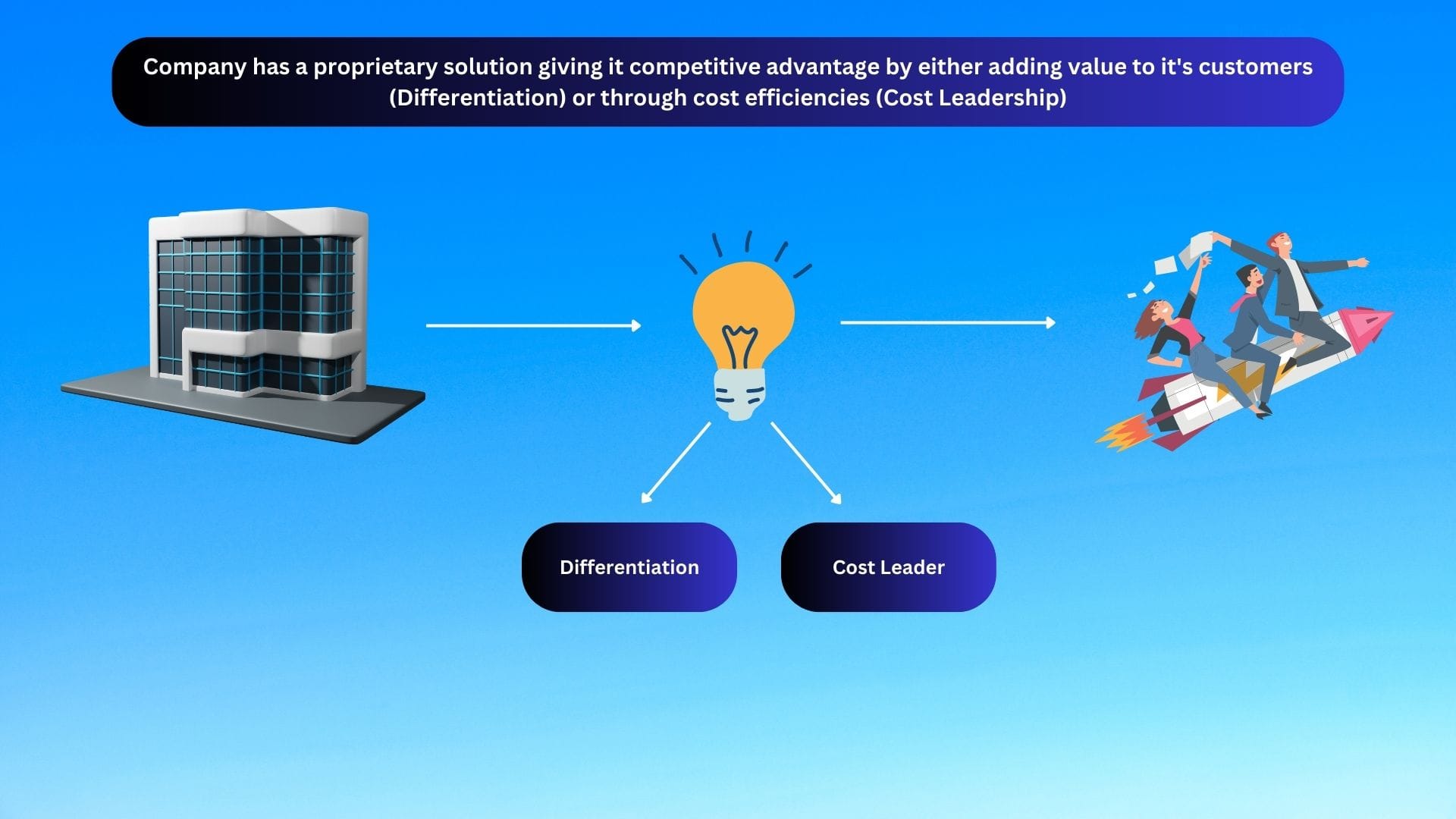
The way we can win is by doing better than others to achieve our core purpose & for that, we should have something special or a proprietary solution which makes us better than our peers.
Proprietary solution that is unique & better than those offered by competitors gives the company a competitive advantage. How?
- By generating greater value than competitors for it's customers or
- By having a lower cost structure than competitors when serving it's customers
The proprietary solution can be a superior brand, proprietary technology, superior data on customers, superior process or systems etc which results in either of the above.
This is where we bring in the three methods (By Michael E. Porter) by which competitive advantage can be realized :
- Differentiation - where greater value is generated for the customer & valued by the customer by better utility or experience compared to competitors increasing Willingness to Pay.
- Cost Leadership - where the company's cost structure is superior to that of competitors. Note that cost efficiencies does not equal cost leadership. A company may be cost efficient but it's competitors may have lower cost base & hence does not make it a cost leader. Cost leadership should be looked at in comparison with peers & competitors. Cost leadership is achieved by first principles thinking on cost by questioning whether a cost line item is needed in the first place.
- Focus - Where the above are applied to a narrow or focused set of customers
Customers
It all starts with customers & the below quote from Peter Drucker :
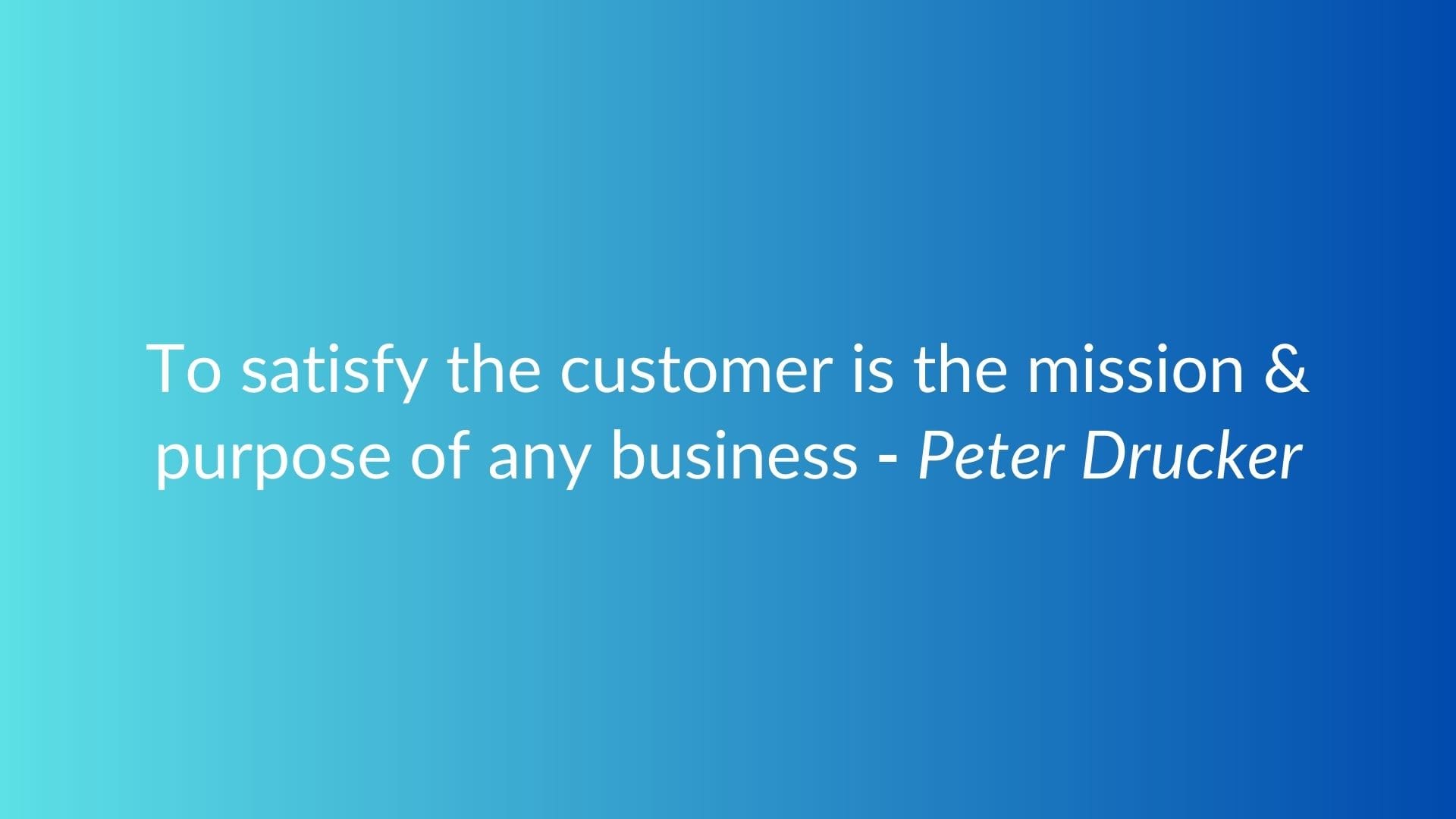
Any core purpose or Winning Aspiration should start with the customer. Understanding customer needs should be the focal point of any strategy discussion. That is then reflected in subsequent choices & actions taken by a company through better products or services to fulfill those needs.
As part of developing it's strategy, a company will also identify the type of customers it wants to serve.
So it is imperative that companies segment it's customers based on some group characteristic so that customers falling under that group can be served appropriately. This is called Customer Segmentation.
Competitive Landscape
We then moved to "Markets" under "External to Company" to explore the competitive landscape where all the action happens.
This is the "Where to Play" as defined by Roger L Martin
It is the environment where a company deploys it's competitive advantage & tries to earn an economic return over & above it's competitors when serving customers in the best possible way.
The Where to Play environment is not a vacuum. There are competitors, partners, regulatory authorities, suppliers, vendors etc. This shapes the choices a company makes to play in that environment. When a company identifies it's strategy, it is better to examine the competitive environment & make necessary choices to ensure it uses it's sustained competitive advantage.
The methodology of making choices is defined under How to Win. (Source : Playing to Win). We will look into the choice part later even though both Where to Play & How to Win are paired concepts & need to be considered together. It's like once we decide the market or industry where we decide to compete, the choices on how to win in that market should also be decided by then.
There are industry or market forces within the control of an enterprise & also outside it's control. It is critical to understand these forces & how they affect the environment where the company chooses to play & in turn, it's impact on the company's strategy.
Another word for External Environment is Competitive Landscape.
The competitive landscape for a particular industry or market refers to the current state of competition between companies in that industry or market. It includes factors such as the number of competitors, their market share, their product offering, pricing strategies and other competitive strategies. (Source : here)
We discussed this over several weeks by zooming out of the external environment like a telescope & zooming in like a microscope as visualized below :
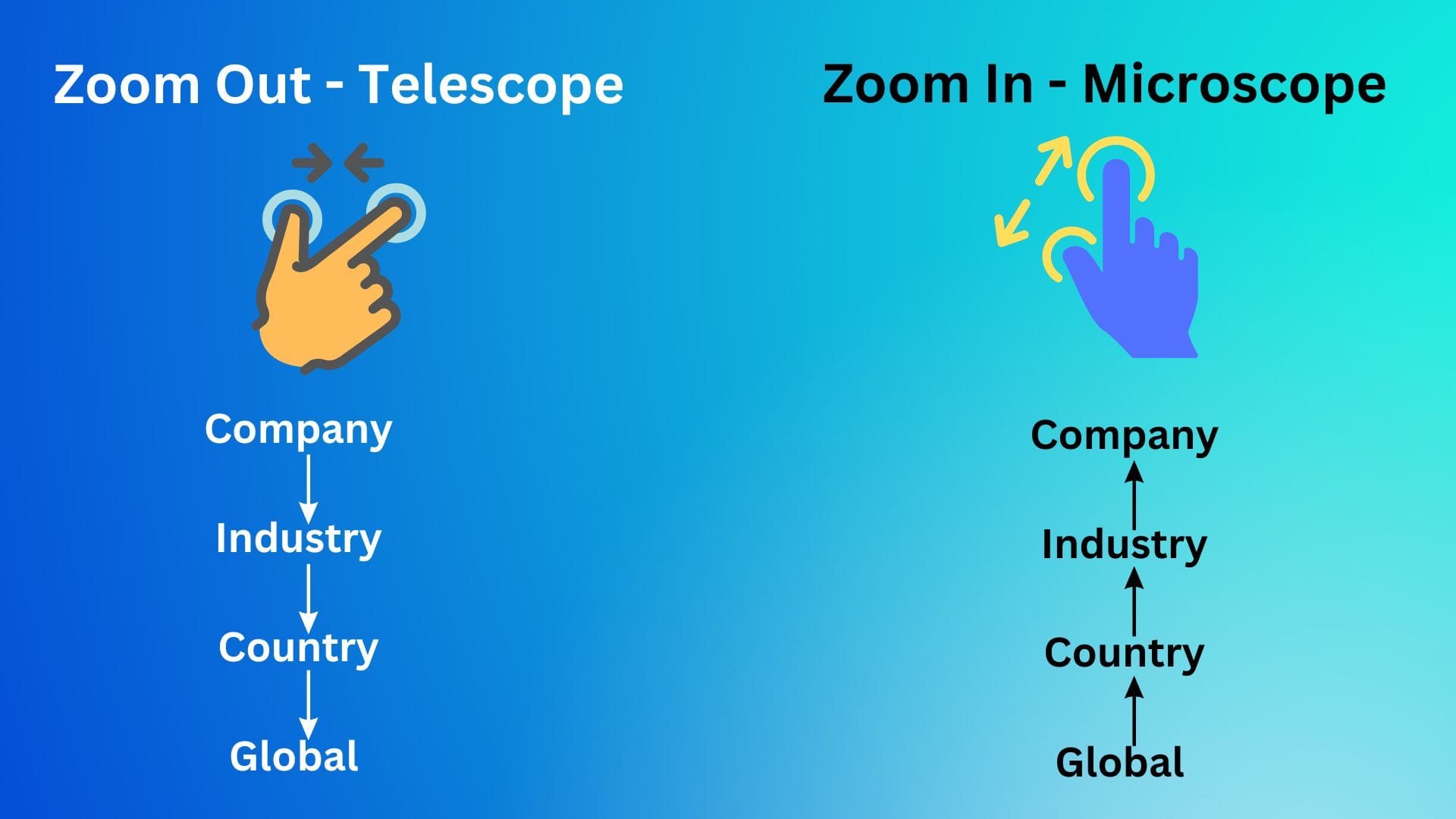
- Zoom Out where we start from industry & move up to Global environment &
- Zoom In where we start from Global environment & move down to industry
We will continue our reflection series next week.