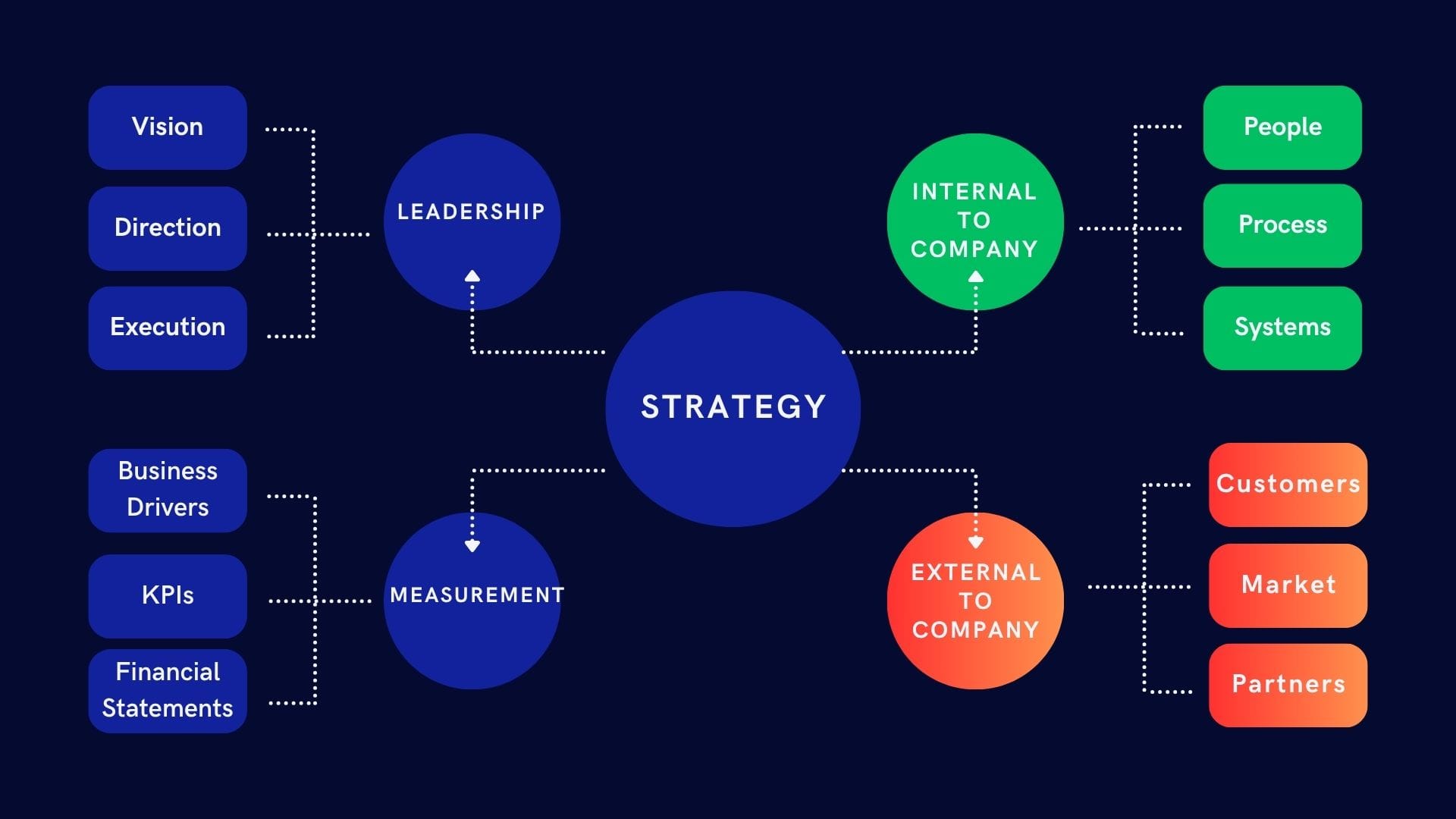
Strategy Byte - Week 71 Macro Variables & Strategy

Table of Contents
- Strategy Link
- Macro Economic Variables
- Moving Forward
Strategy Link
Over the last couple of weeks, we discussed several macro-economic variables. Now why did we do that? And what has that to do with strategy? Roger L Martin's latest definition of strategy is :
Strategy is an integrated set of choices that compels desired customer action. (Source : here)
What does understanding macro economic variables have anything to do making choices to compel desired customer action?
Normally, what does desired customer action entail? It means - buy a company's product or services. Now, why should a customer buy that company's product or services? Because
- It helps or is the primary reason to attain their goal or purpose
- It helps them attain their purpose in a better way than other similar or substitute products
So, customers need something to achieve their goals & a company provides the product or service which works better than similar / adjacent product or services or in other words "better than their competitors".
A strategy requires a company to make choices which involve substantial capital investments in their home country or another country to make their products better or cheaper for their customers so their products are preferred over their competitors. For e.g., Apple which created their manufacturing ecosystem in China as part of their strategy. When we model such investment scenarios, what environmental variables will be considered?
Roger L Martin again coined the term "WWHTBT" or "What Would Have To Be True". What does it mean?
It is more like thinking in the reverse to understand what factors need to be in place or to be true to ensure success of a strategy decision. The variables can relate to any factor in the external environment - competition, industry structure, unit economics, customer loyalty, churn etc. (The factors can also relate to internal environment like org structure, management, capital allocation etc which we will touch upon in the next couple of weeks).
If the factors for a favorable execution is not in place, then what needs to be done to ensure favorable environment for a successful strategy execution? Some of those factors are in the control of the company (product related decisions, customer service, quality, branding etc) while others are not (customer choices, interest rates, inflation etc).
Some of the factors which are not in control of the strategic choices may be the factors deciding the direction which a company takes.
There are two stages at which macro-economic variables are considered during strategy :
- The assumptions that go behind the strategy at the time of its creation. For e.g., what would be the interest rates over the next XX period? or where would inflation be over the next XX period & how would it impact customers or the choices a company needs to take with regards to introducing new products or funding to move forward with its strategy?
- When executing strategy to assess whether the macro-economic variables are trending in the right direction with the assumptions made & to take necessary action in case of significant variance.
We ask the question - What Would Have To Be True in the macro economic variables (among many others which we will cover later) to ensure a company makes the right strategic choices?
What would have to be true for an enterprise to penetrate the smartphone market in say, China? Let us answer it in a bit after reviewing the key Macro Economic variables.
Macro Economic Variables
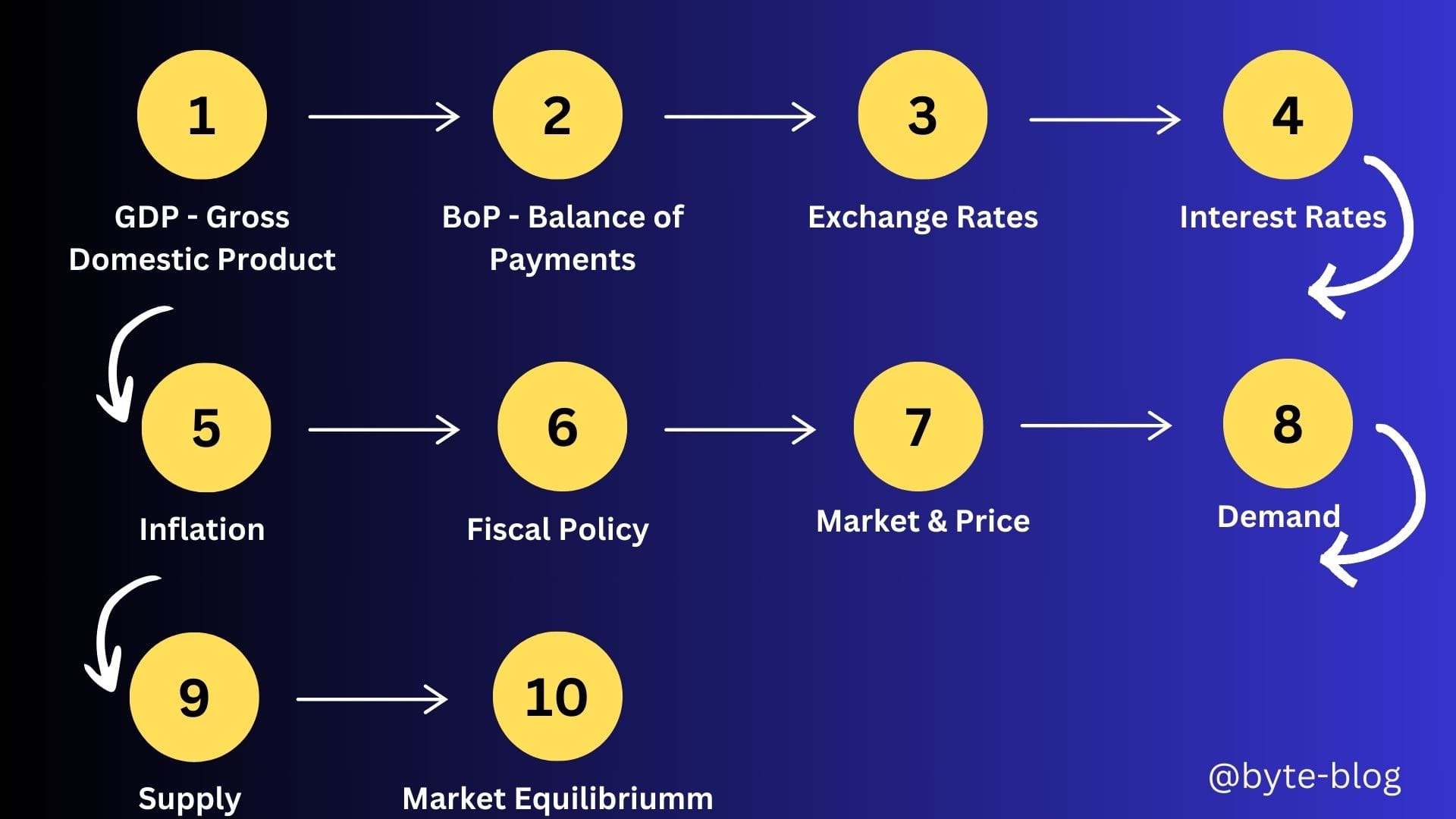
Why is understanding macro-economic variables important?
We can understand this at two levels :
- Level 1 - Where the fundamental variables are the result of the performance & resultant output of the economy through manufacturing, trading & other activities impacting economic output.
- Level 2 - Depending on the economic cycle, the level of government intervention through fiscal or monetary policy to influence the economy.
The main measure of an economy's output is GDP (Gross Domestic Product) which means the total value of all goods & services produced for final sale in an economy. No economy continues on a particular trajectory forever. It goes into a cyclical mode due to various factors & constraints around the macro economic variables. For e.g., if an economic cycle is on an upward trend, the GDP increases resulting from higher productivity.
Economic expansion drives output & employment growth, which tightens the labor market and increases spending power of the local population, driving up inflation (or demand pull inflation). This causes the Central banks to intervene by raising interest rates to bring down the inflation rates to dampen the economic momentum.
Understanding where a country is in the economic cycle is critical to understand where it might trend in the next couple of quarters or years - meaning whether there will be growth or recession in a given year & what that rate of change will be.
Let us take some country references as below to understand it further :
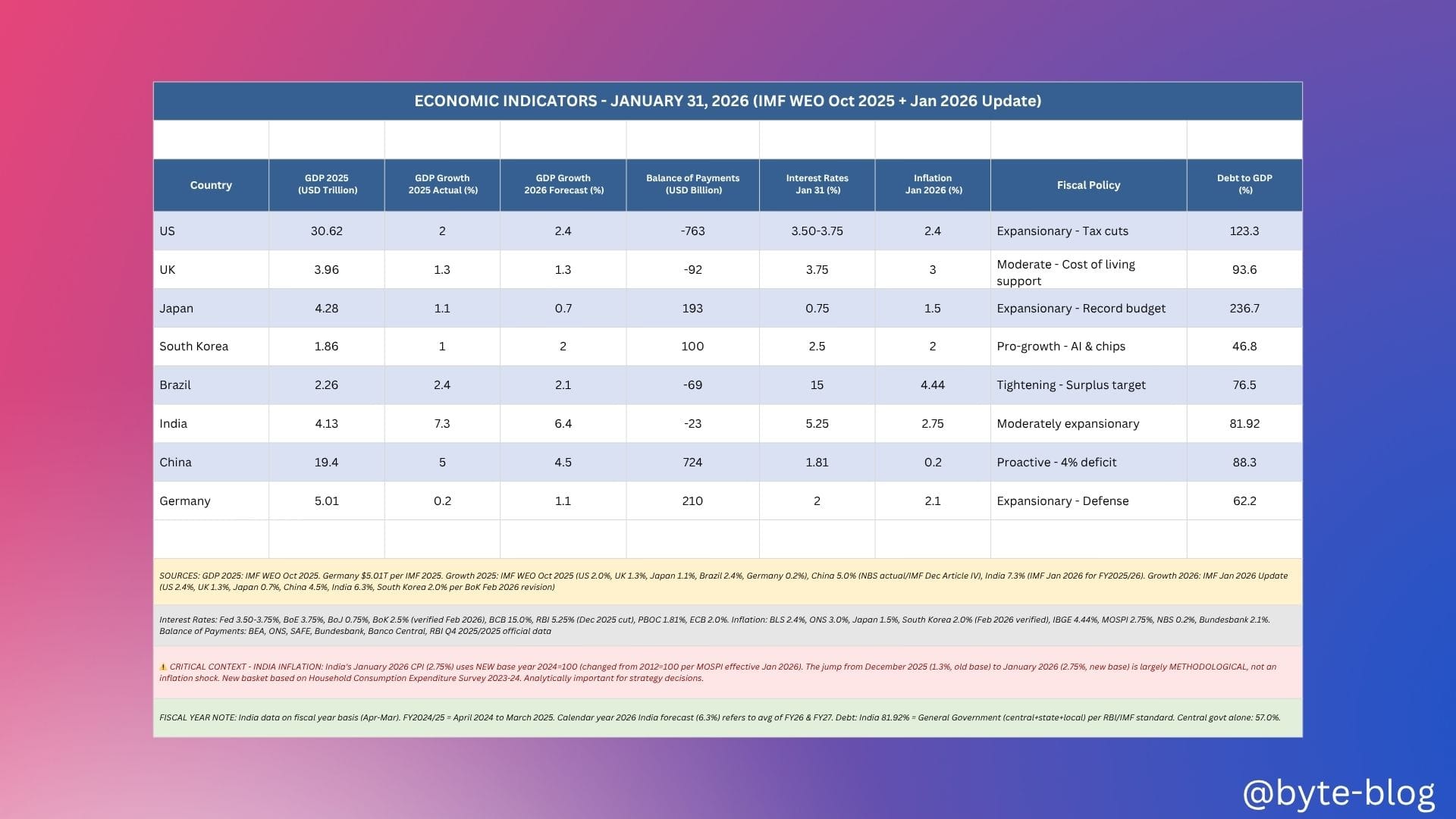
You can see from the above table the level 1 numbers (GDP), forecasted GDP growth & Balance of Payments (BoP) position & inflation rates. You have to note that these numbers are as of 31st Jan 2026 or as of 2025 (depending on official release).
If we look at level 1 variables - US has the highest GDP at $30.62 trillion & is expected to grow at 2.4% in 2026 from 2% in 2025 with an inflation rate of 2.4%. Thus US is at moderate growth & near-target inflation. What are the drivers of growth? It is mostly consumer spending which is almost 68% of GDP along with business investments. The Balance of Payments reflects the economy structure where it imports more than exports & hence the high negative balance or deficit of $763 billion.
The Level 2 action by the US Government - Expansionary fiscal policy to drive the economy through tax cuts & government spending. If the spending is higher than the revenue earned through taxes or fees, it results in fiscal deficit. The high debt to GDP ratio of 123.3% reflects cumulative decades of fiscal policy of borrowing to fund its growth.
Contrast it with the other global giant - China's Level 1 variables - Its GDP at $19.4 trillion & is expected to grow at 4.5% in 2026 from 5% in 2025 with a very low inflation rate of 0.2%. Private consumption is ~38-40% of China's GDP, government spending ~16%, and fixed capital investment ~42%. Net exports contribute a single-digit percentage of GDP. In 2024, value-added industrial output accounted for nearly 37 percent of China's GDP, while China's service sector was 56.7 percent of GDP. (Source : here).
If the economy is growing, shouldn't inflation be high in China given 4..5% GDP growth rate? China's low 0.2% inflation reflects a prolonged property sector downturn, local government fiscal stress, and deflationary pressure from overcapacity in manufacturing & hence going for an proactive fiscal policy, with the projected deficit to GDP ratio set at 4%. - Level 2 Action (Source : here)
So, What would have to be true for an enterprise to penetrate the smartphone market in China? - Consumer demand for the product should be there, Industry friendly policy including market access for foreign tech firms, sound fiscal & monetary policies to ensure healthy economy to stimulate overall consumer demand etc. If these conditions turn to be true, a company will be able to penetrate the market & frame its strategy accordingly.
But then if you look at the data above, China has to stimulate its low consumer spending economy through a proactive fiscal policy. So, that part of the WWHTBT needs to be analyzed in detail to ensure the conditions actually turn out to be true for a successful strategy.
Correlating the level 1 numbers with the level 2 Government action helps us to understand where in the cycle is the economy in & the expected action by the Government which can be reasonably anticipated. Depending on the economic cycle & the anticipated Government action, an enterprise can decide on the strategic choices to meet its Winning Aspirations.
There are other factors or nuances which impact a country's economic policy & not only the variables discussed above, but at a high level, understanding the above variables helps.
Moving Forward
We will discuss these nuances again but for now we continue our "External to Company" journey from macro-economic environmental variables to industry analysis & also "Internal to Company" in parallel over the next couple of weeks.