Thank you 2025, Hello 2026

Table of Contents
- Reflection time
- Mission Driven Life
- Understanding Yourself
- What we do is probability
- Time Alone
- Attention Deficit
Reflection Time

As we break for the holiday season, let us take a few moments to remember the year that passed.
Years pass by & each year brings new learnings & new thoughts—both from good & bad experiences. Just like trees shed leaves during autumn to bloom again in spring, we shed old thoughts for new thoughts which shape us from inside out as we move forward into the new year. This is what change is all about.
Now, all this happens over a period of time & not suddenly at the end of the year. But end of the year is when we typically reflect on the year passed & look forward to the new year. I call this the "Reflection time" where we reflect about what we did, what we didn't do, what we should have done & what we shouldn't have done.
Below are some learnings that resonated with me deeply:
- Mission Driven Life
- Understand Yourself & what you have
- What we do is probability
- Time alone
- Attention Deficit
Mission Driven Life



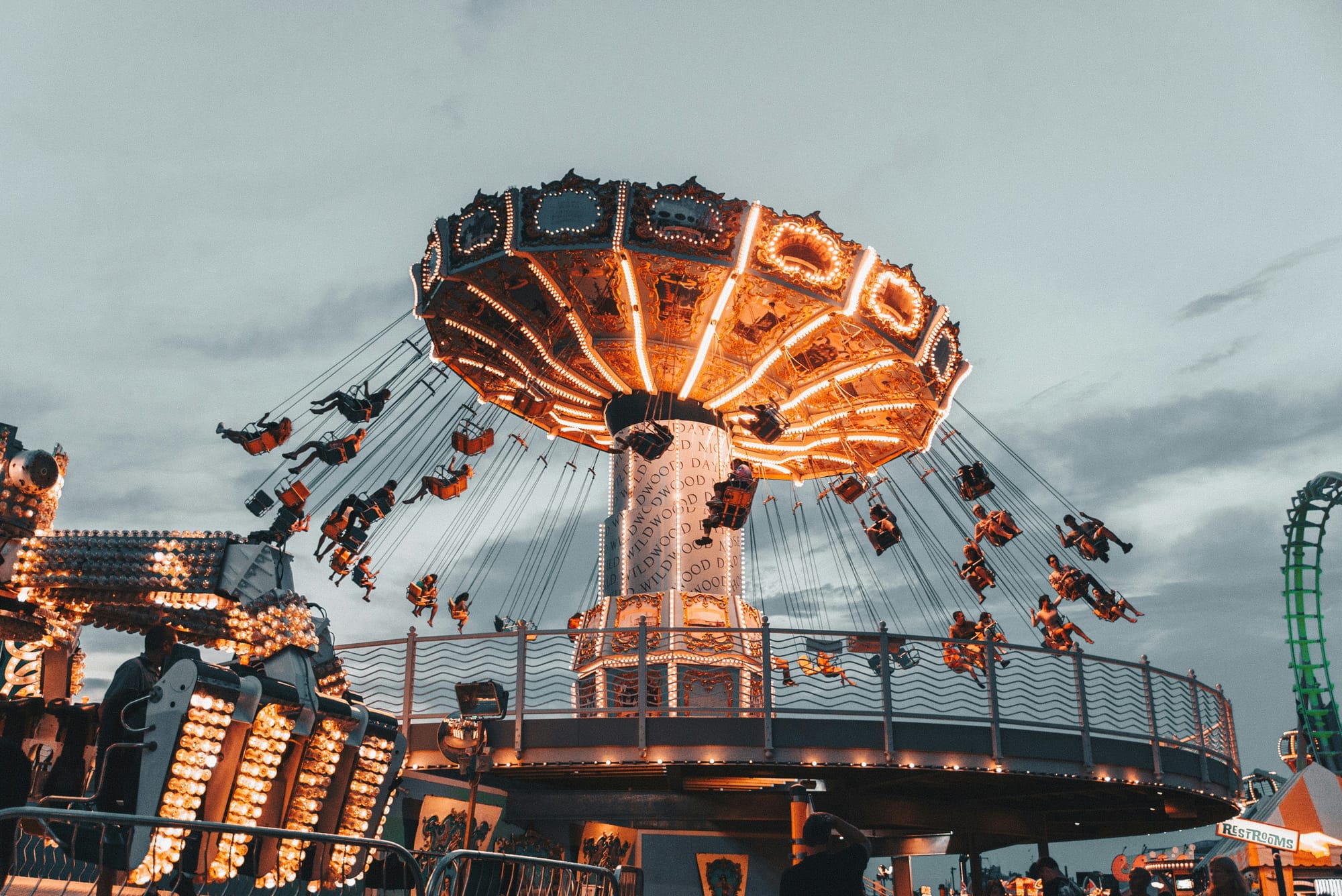
I wrote about purpose last year. I have another take on this topic this year.
We've all been to theme parks with our children. They get so excited once they see all the paraphernalia, life size statues of their favorite characters & the adrenaline inducing rides.
One thing I've noticed in these theme parks is that they give children a mission to complete which involves them having to do certain things at certain locations in the park—either making something (like in Legoland) or finding a hidden message or treasure.
This ensures the children (as well as their parents!!) visit most of the sections in the theme park & in the end gives them a sense of achievement. It's a win-win for both the parties—the families cover most of the park ensuring the children are happy plus they leave with a sense of achievement by completing the mission.
For the park, they can market related items in each of those sections to ensure sales & repeat customers.
I zoomed out & wondered - Are we in our own theme parks? We navigate different sections of those theme parks via work, families, friends, colleagues, strangers etc. We create our own theme parks. It's our playground. But the playground can change in unexpected ways that we need to pivot our direction. There are no maps like what the children get for specific directions to navigate the theme park.
Without a map to give us direction, we need a mission to guide us forward, gives meaning to our actions & the direction we take.
But it sounds all esoteric—mission, actions, direction. I wanted to go down this rabbit hole & I came across the below actionable steps from this write up that I can take to lead a mission-driven life:
- The mission is to select a good problem to work on.
- You have to work really damn hard to figure out what fulfills you.
- Love what you do.
The problem should be something internal to us—like the itch an entrepreneur feels when they are building a company or product—to solve a shortfall in service or problem customers are facing or can be something entirely new.
Not all of us can be entrepreneurs but we can find the solution to a problem in our domain of expertise—it can start from a work related problem or from some other source. Figure it out & make it your mission to solve that problem.
Or it can be a life problem like "I don't get enough time to spend with my family."
But solving that problem should be a fulfilling experience. It takes an extraordinary amount of effort & time to figure out what our inner drive is. But it's worth it. Also, it will turn out to be something that we love to do.
I wrote about this earlier, but feel it's worth revisiting those thoughts again. Trying to answer the below questions will provide an idea of what your inner drivers are which will provide a direction & meaning to your life:
- What are your values? Those red lines we never cross & rule our direction & thoughts.
- What drives our actions daily?
- What makes us want to get out of bed & just hit it?
- What do you feel strongly on?
- What do you look forward to?
Understanding Yourself

In addition to having the drive which itself is something unique to yourself, it is important to understand yourself meaning your tastes, experiences & that which makes you unique. Those are your unique markers which you can use for achieving your dreams.
Now, your tastes or experiences won't be enough to achieve something - they need to be used & directed towards a better life. Right? Yes, but this is where a write up on strategy by Roger L Martin opened a new perspective.
A company which does not have as many resources as a well endowed competitor should identify places it can improve without spending much resources & which its competitors can't or won't spend on.
He follows up with an example of Singapore, which through its iconic leader Lee Kuan Yew, transformed from a country of nothing to what it is now. Its GDP per capita when it broke away from Malaysia was $516, which was the same level as Uganda, Sierra Leone or Papua New Guinea. Also, it was in the middle of nowhere geographically. Now its GDP per capita is $157k, one of the richest countries in the world.
How did he make it happen?
Companies with resources can spend on expensive advantages that competitors cannot spend or match. But since Singapore had limited resources, they allocated their limited capital to ensure companies could do business with least friction & seamlessly by developing the legal system, regulations, incentives & strict punishments against corruption around this one concept—ease of doing business. They didn't have to spend millions around these incentives. But it required extensive discipline & commitment along with ongoing attention. Competitors with extensive funds & resources would normally spend on something easier like huge infrastructure development projects rather than disciplined long time initiatives like this.
He also gave an example of his tenure at Rotman School, where with limited funds, he achieved his objective of putting the business school on the map of best business schools through actions which did not require enormous funding that his competitors had.
This is not some motivational guru giving quotes. This is from the top thinker on strategy giving clear examples on how someone with limited resources can direct what they have to actions which they can easily do to achieve their strategic objectives.
Was it easy? No. Will it take time? Yes. Singapore took decades of disciplined action to achieve what it did.
How does that apply to us as individuals? It goes back to what I said above.
- What makes you tick?
- What are your unique traits which you can leverage with least resources to build or achieve your goals?
It has to be something which comes naturally to you & which you love doing. Is it easy? No. It might take years of disciplined work.
It is going to be hard work to find that out. We have to go deeper into ourselves to find that spot. Go on that journey!! You will not know what lies there.

What we do is Probability

I came across an interesting concept on X called "Surface area of luck". Credits due to the original writers. (You can search on X for the original write ups.)
We all know life is probabilistic & not deterministic. What does it mean? (Source: here)
Deterministic models operate under the assumption that given a specific set of inputs, the outcome is fixed and predictable with no randomness involved. These models establish a strict, predefined relationship between inputs and outputs, producing the same result every time for the same input. They are characterized by fixed rules, predictable outcomes, and simplicity, making them easier to understand and implement. For example, a basic calculator or a linear regression model can be considered deterministic, as they map inputs to outputs through a precise, non-random rule.
In contrast, probabilistic models explicitly incorporate uncertainty and variability into their framework. Instead of producing a single outcome, they generate a distribution of possible outcomes, reflecting the likelihood of different results based on probability distributions. This approach is particularly useful for complex, noisy, or uncertain real-world scenarios where multiple factors interact in unpredictable ways.
Our life is probabilistic & not deterministic—meaning if we repeat our actions multiple times, the outcomes may not be the same each time. This means we are not in control of the outcomes of our actions but we can increase the probability of a favorable outcome through certain actions.
For e.g., we can increase the probability of getting higher marks in an exam if we study diligently. Will it happen exactly the way we envisioned it? Maybe or maybe not. We can't predict that exact outcome but it increases the probability of success. This concept is called "Increasing the surface area of luck". What does it mean?
It means that through taking actions like showing up every day, doing what it takes consistently & with discipline increases the probability of achieving our goals. Do we know when it will happen? No. Will it be exactly the way we want? Maybe or maybe not. We can't say.
All we can do is increase the probability of luck happening. Do what you have to diligently, consistently & with discipline. Showing up every day doing what you need to do increases your "surface area of luck".
Time Alone

Carve out time alone every day. It can be just five minutes or ten minutes. Just sit somewhere & look out into the sky or outside your window. Do nothing. Thoughts flow through us & due to the solitude of the moment, we will be aware of all those thoughts flowing through us.
Are we expected to do something about it? Nothing. Just sit there & flow along with your thoughts.
What are we expected to achieve from this? Not sure but I feel more aware of my thoughts & peaceful in those alone moments. In this age where we are constantly bombarded with notifications, pings, calls, emails etc from attention seeking external apps, standing still is a luxury.
Let us be more aware of what goes on inside our minds.
Attention Deficit


There are lots of things whose sole objective is just to hijack our attention, even if it is for a second. Notifications, pings, reminders etc etc—every minute of the day. It's not only notifications but also something called "doom scrolling" where we keep scrolling down social media despite it having almost NIL value for our time, which is the most valuable resource we have. It's like spending loads of money on garbage. No one is immune, including myself. We are going through severe attention deficit—spreading ourselves across so many things that none gets the attention it deserves.
There is also something called "Information overload". Those who would like to get updated on daily happenings or learn new topics are bombarded with information that there is no time to read any of those articles & even if we read them, we don't have the time to reflect on what we read. We don't give enough attention to things that matter.
What do we do about it? Simple solution is to keep the phone in another room & check in at certain specified hours. Easier said than done. But it is doable. We have a habit of constantly checking our phones irrespective of whether there is any notification or not. Then we end up doom-scrolling. I know it because I am guilty of doing it myself.
I try to keep my phone in another room while I am at home, checking in only at specified times. But sometimes I end up checking something on social media & scrolling before realizing what I've done. Then I keep the phone back.
It is something I am working on & hope to keep reducing my time with doom scrolling going forward.
With these learnings, I go into 2026 with hopes to improve myself & learn on the way.
May the Holiday season fill your home with joy, your heart with love, and your life with laughter.
