Strategy Byte - Week 66 The Journey so Far Part VI

We continue our journey to understand strategy by looking back & reviewing our steps which will help us gain perspective on the subject & also guide us moving forward.
Last week we reviewed the drivers of interest rate which are :
- Supply & Demand
- Central Banks through
- Open Market Operations (OMO)
- Reserve Requirements
- Discount Window
- Setting Base Rates
- Setting Forward guidance
We ended with a deeper question - What is the main consideration influencing Central Banks to raise or lower interest rates?
The main consideration is inflation. What is inflation?
We go back to Week 27 to Week 30 where we deep dived into inflationary waters.

Inflation
This macro economic variable is closely tied to our lives. How? Through rising prices of goods & services.
There is inflation when the prices of many of the goods that we buy rise at the same time & then continue to rise. Explained another way, inflation is ongoing increases in the general price level for goods & services in an economy over time. (Source :here)
How is inflation computed?
Inflation Computation
We defined inflation as ongoing increases in the general price level for goods & services in an economy over time
So the price level of goods & services is computed over a period of time & the increase over that period is determined. A common measure of the price level is the Consumer Price Index or CPI. What is Consumer Price Index or CPI?
Consumer Price Index (CPI)
The Consumer Price Index (CPI) is a measure of the aggregate price level in an economy. The CPI consists of a bundle of commonly purchased goods & services. (Source : here)
The below steps are used to compute CPI & ultimately inflation rate.
Step 1 - Select a Basket of goods & services
A representative basket of goods & services is selected which reflects the spending habits of households. This basket includes categories like food, housing, clothing, transportation, education & medical care.
Step 2 - Collection of Price Data
Prices for the goods & services in the basket are collected periodically from various sources such as retail establishments, service providers & utility companies
Step 3 - Assign Weights
Items in the basket are assigned weights. This reflects their relative importance or share of total expenditure for a typical household.
Step 4 - Calculate the cost of the Basket of goods & services
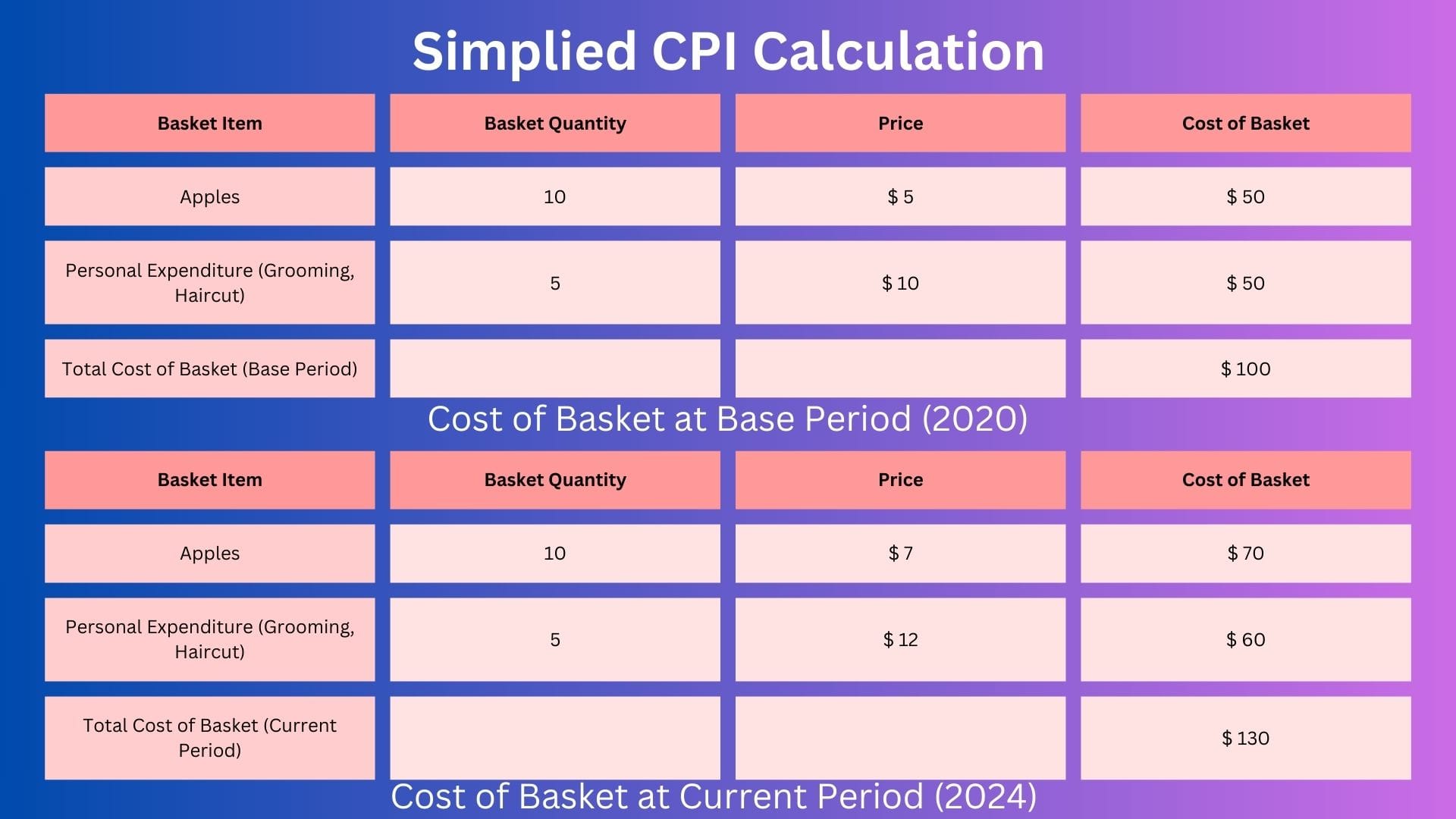
- Find the cost of the basket at base-period prices
- Find the cost of the basket at current-period prices
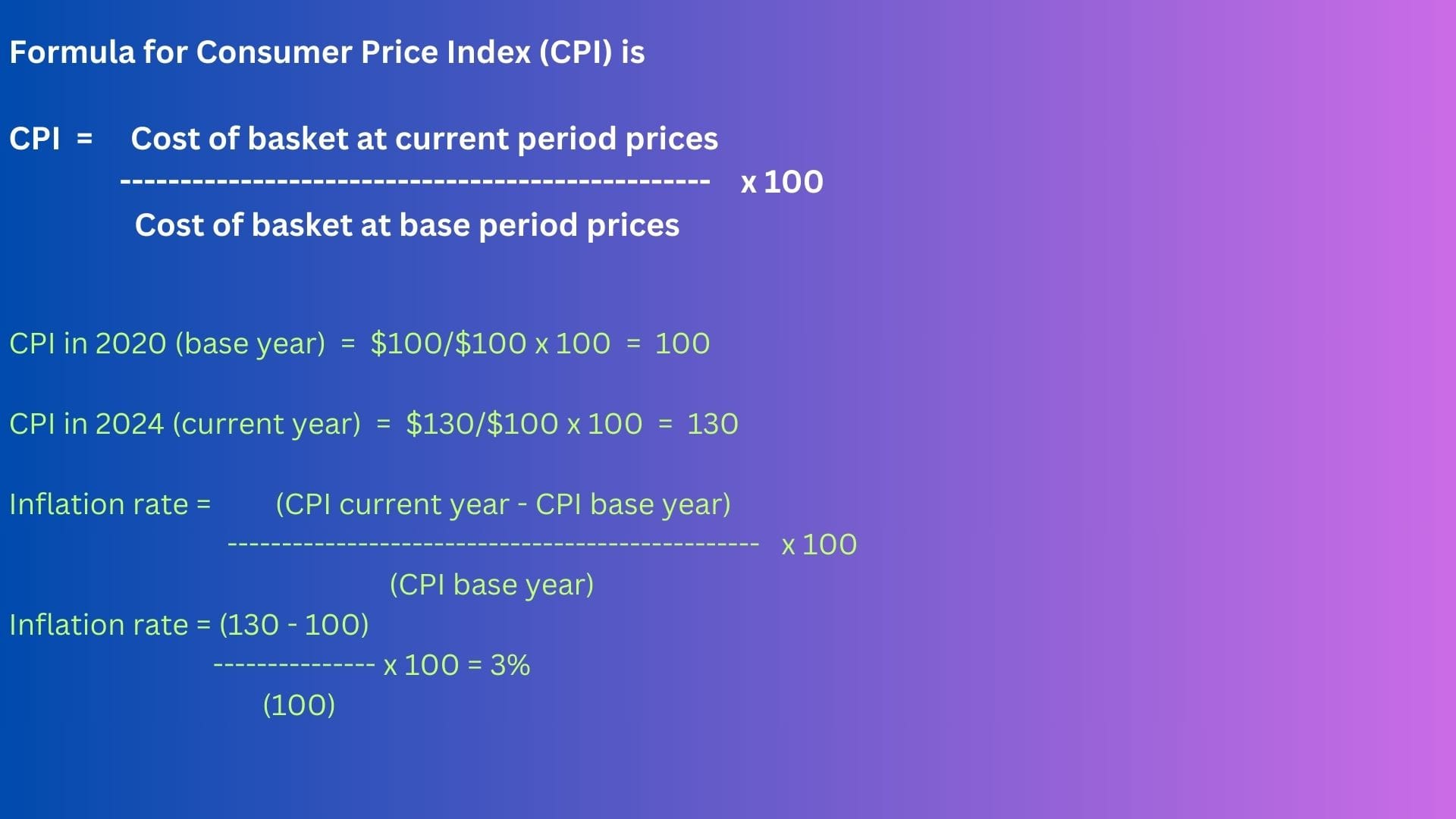
- Calculate the index (CPI) for the base period & the current period
Step 5 - Calculate inflation
Inflation rate is calculated as the % change in the price level from one year to the next.
Visualizing the above as an example :
But, what causes inflation?
During Week 27, we explored the historical cases of Zimbabwe & Argentina. We saw that the impact of poor economic policies combined with short term actions causing long term damage are the most likely causes of inflation.
We classified them under two headers as :
- Falling economic output resulting from mismanaged economic policies & resultant demand for those goods
- High Government spending
Thus, the major reasons for inflation can be
- Increased money supply
- High cost of production (materials, labor etc)
- Supply chain disruptions
- The above can be exacerbated by local as well as geopolitical events (COVID, Wars etc)
The above are reasons, but what are the underlying mechanisms causing it?
Causes of Inflation
There are two primary causes of inflation. They are
- Demand Pull Inflation
- Cost - Push Inflation
Demand-Pull Inflation
Demand - Pull Inflation, as the name signifies, occurs when the demand for goods & services exceed their supplies.
We discussed earlier in the context of interest rates, how it fluctuates in line with supply & demand for money. Focussing on the demand part, if the demand for money increases, the price of money or interest rates also increases.
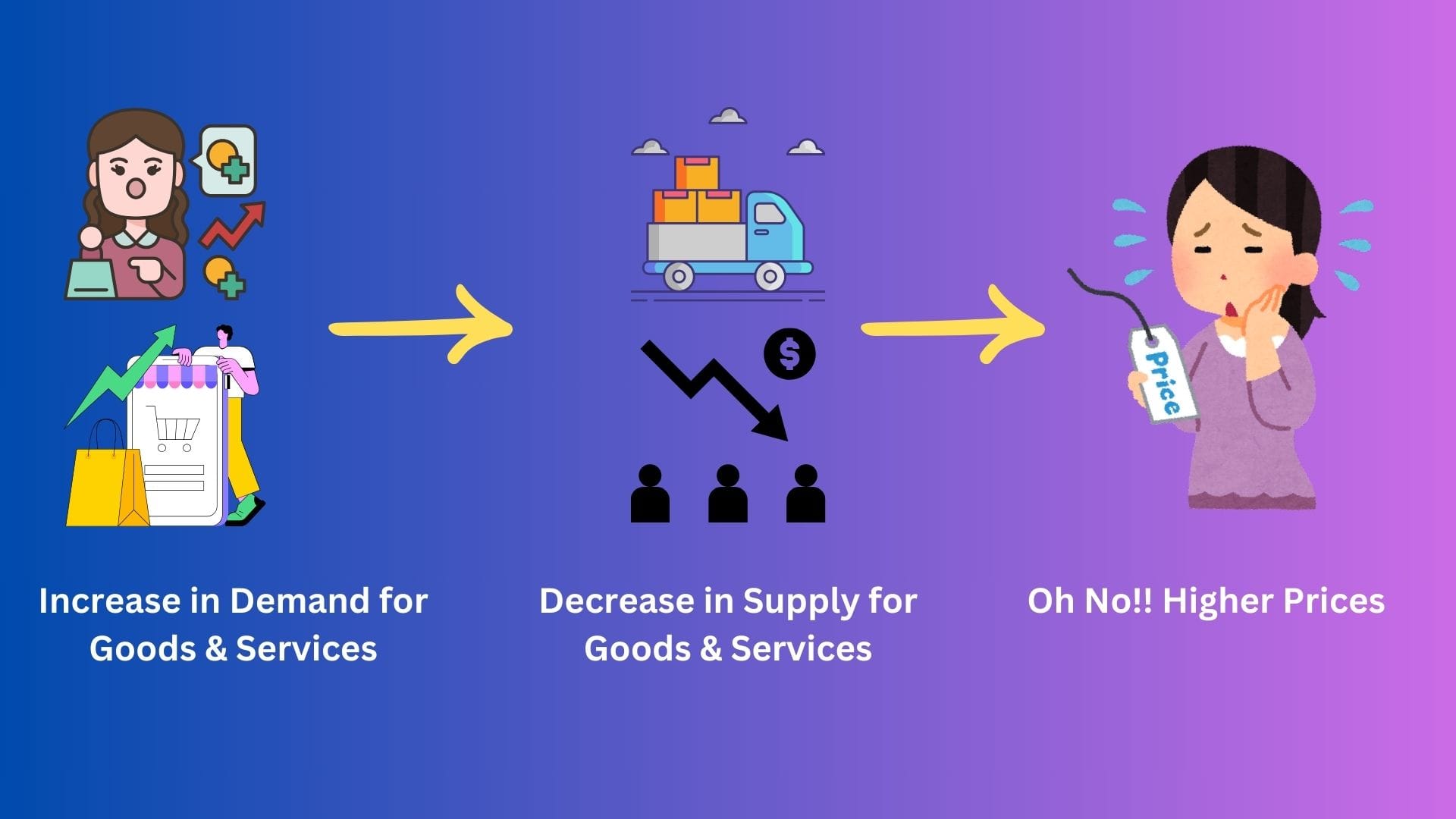
Applying the same analogy to goods & services, if the demand for goods & services increases than is being produced, the supply of those goods & services remain the same or they drop. Due to shortage in supply of these goods & services, suppliers increase their prices on those goods & services.
To meet the increased demand, suppliers have to increase production of those goods & services which means more workers to be hired (of course, this scenario excludes fully automated factories!!). This means this type of inflation is accompanied by lower unemployment.
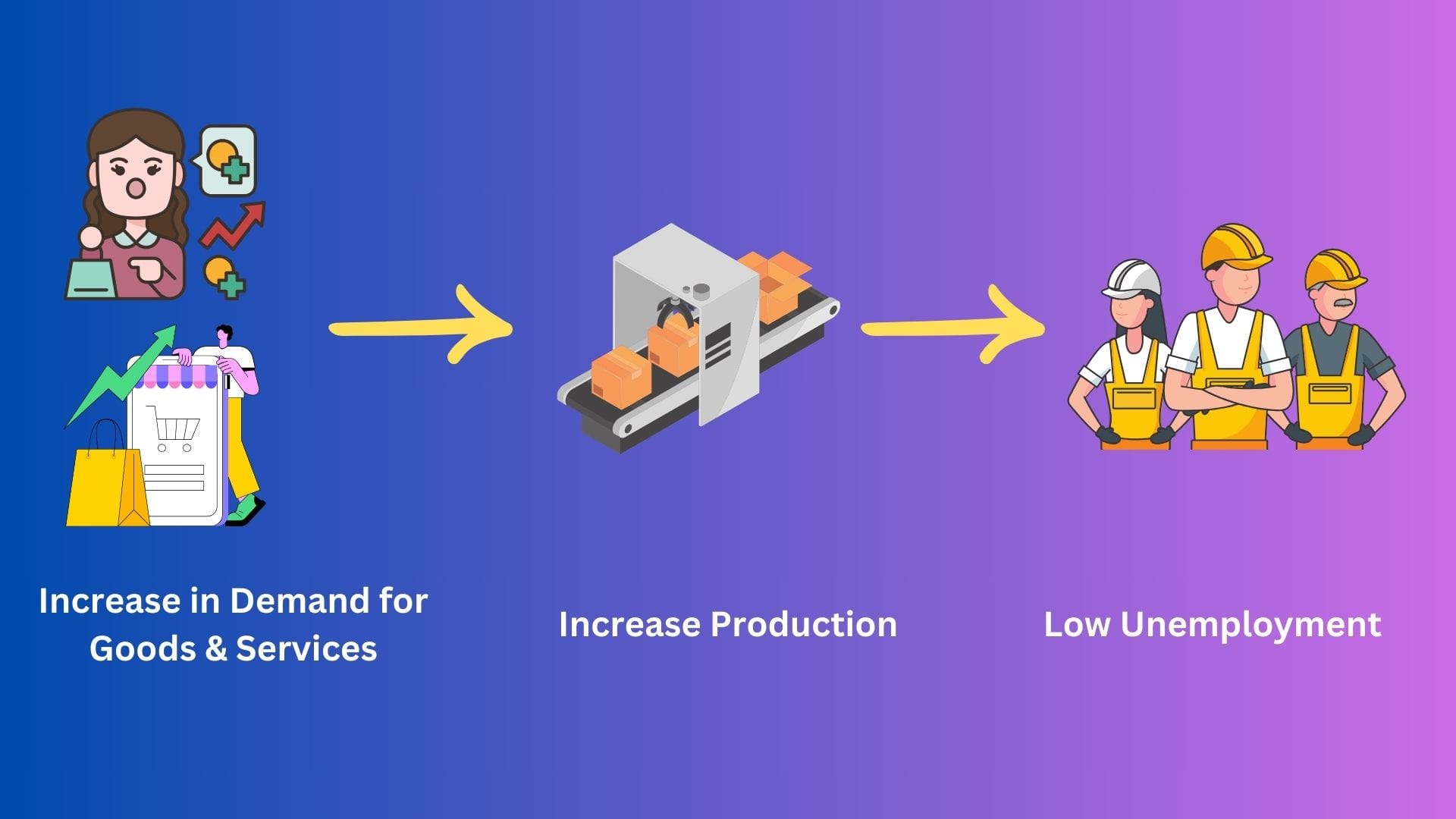
Higher employment or lower unemployment results in higher disposable income for households & higher willingness to spend. This causes more people to have higher disposable income.
This causes demand to increase further & further price increases. This price rise causes higher inflation & as it is accompanied by lower unemployment & higher production & disposable income, it causes GDP to increase.
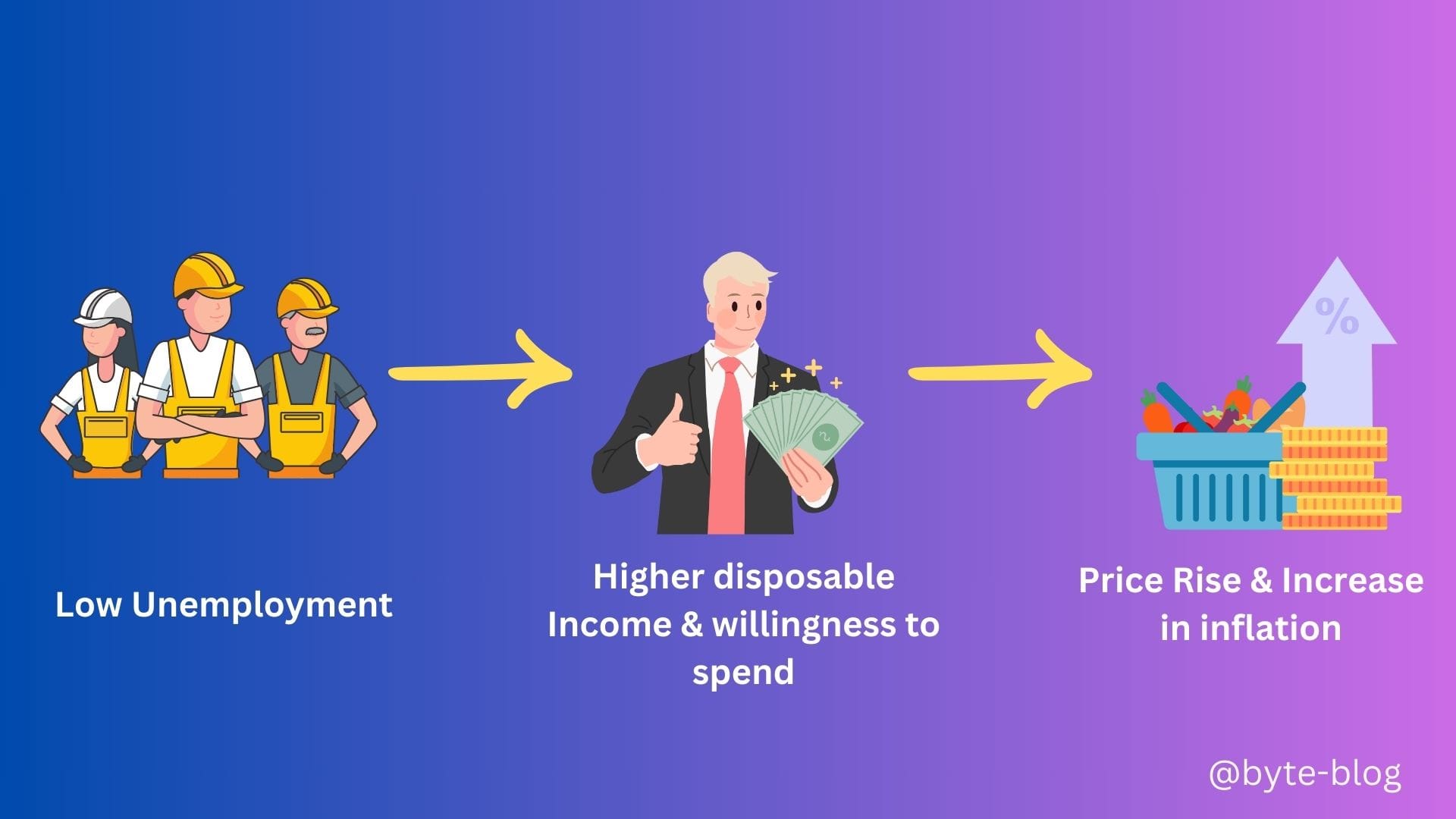
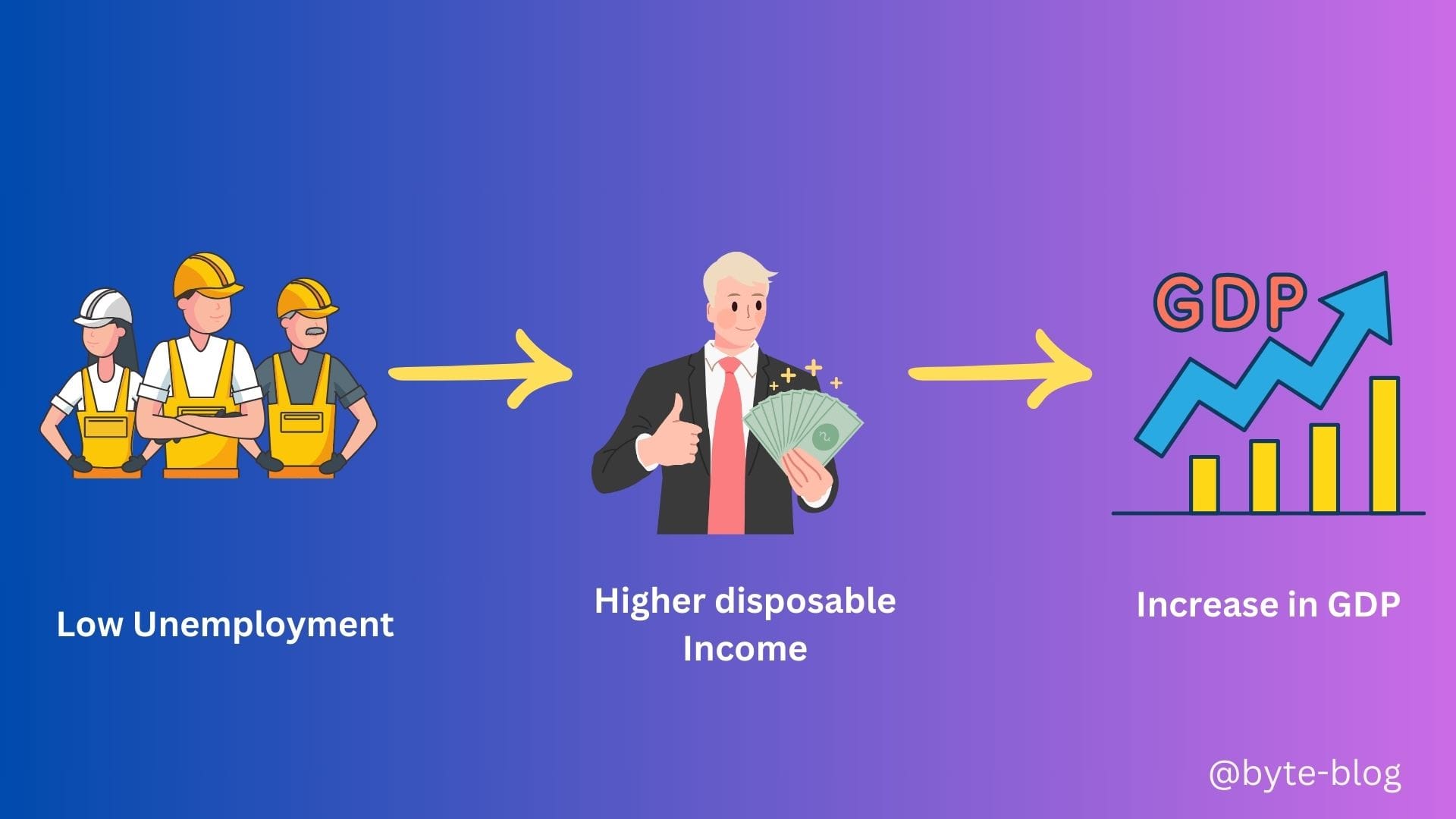
In a nutshell,
- Excess demand for goods & services causes supply constraints
- This causes businesses to raise prices & increase operations to meet rising demand
- Increasing operations causes higher employment & more disposable income.
- This increases willingness to spend increasing demand & so on..
Now, what are the causes of demand pull inflation or what causes this increase in demand?
Causes of Demand - Pull Inflation
- A Growing Economy - A growing economy causes consumers to have higher disposable income & be more optimistic about the future. This increased optimism results in higher spending pushing up demand further.
- Expansionary Monetary Policy - An expansion of money supply without corresponding increase in supply of goods causes prices to rise. Also reduction in interest rates causes consumers to take on more debt to buy goods or services pushing up demand leading to price increases.
- Expansionary Fiscal Policy - Economic policies resulting in higher government spending, lower tax rates etc result in higher disposable income for households pushing up demand leading to price increases.
Let us now understand the other type of inflation
Cost - Push Inflation
Cost - Push inflation refers to inflation caused by increase in costs of production. In simple terms, when the cost to produce any goods or service increases, the price of the final goods or services increase, & this causes cost-push inflation.
The increase can occur at any stage of production or in general business costs - energy costs, supply shocks, wage increase, interest rate hikes, tax hikes etc
What are the implications of higher production costs ?
- Contracting supply - Suppliers decrease production when it costs more for each unit of output they make
- Increase Price - Suppliers increase price to offset the increasing cost of production.
The main point about cost push inflation is that this is not caused by increased demand. In demand-pull inflation, higher prices was caused by high demand & low supply. Producers can increase production & supply with increased confidence due to high sustained demand. This also causes increase in production costs but this increase would be offset by higher profits due to hike in price & ouput.
In cost-push inflation however, due to high prices, demand actually falls resulting in contraction in economic activity. For the suppliers, this results in lower output & profits. This causes rising unemployment as suppliers embark on cost reduction initiatives.
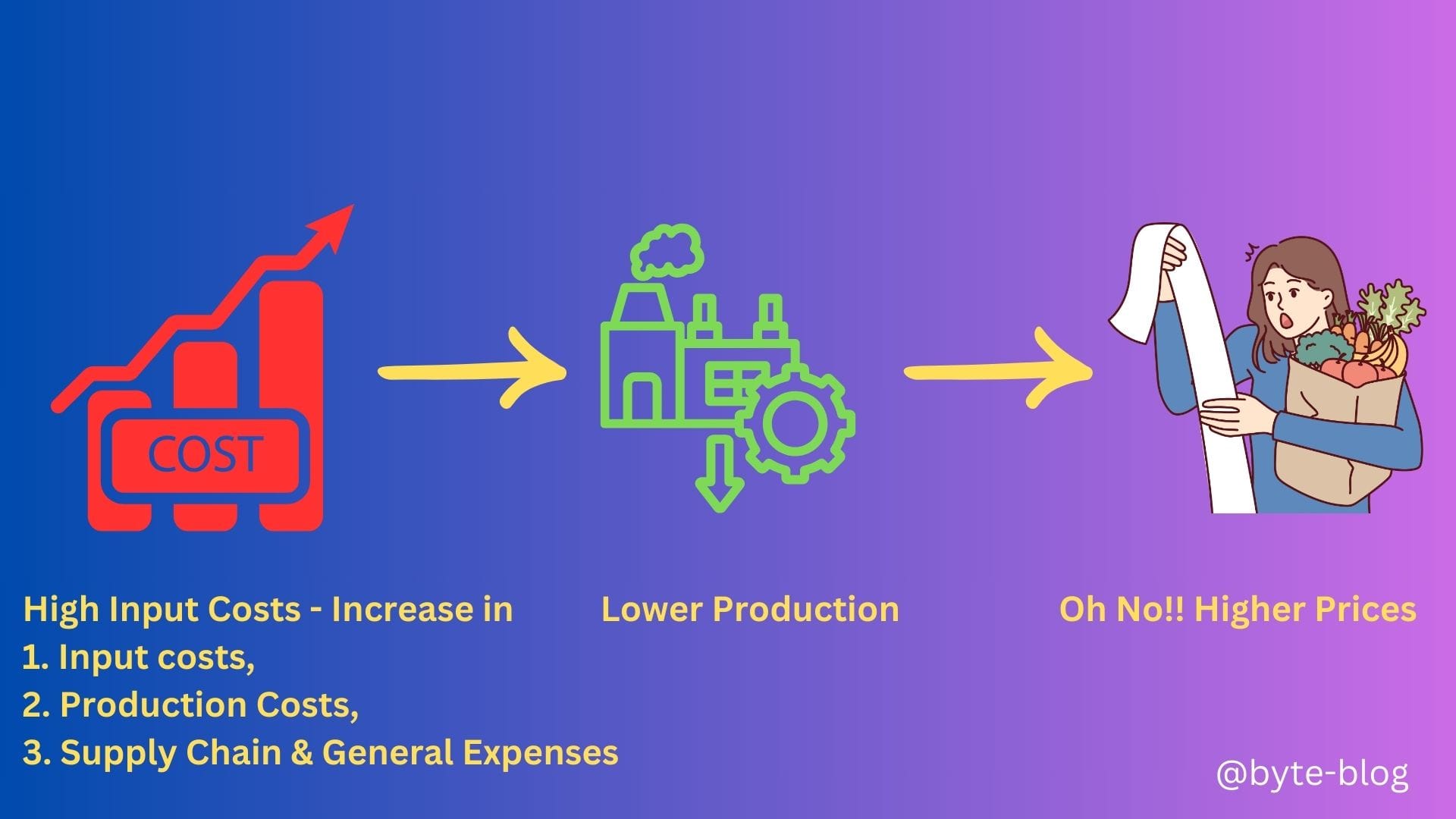
Causes of Cost - Push Inflation
Anything that causes cost of manufacture, supply, distribution or general expenses to increase results in cost - push inflation. Some of the major reasons are :
- Rising Fuel Costs - affects transport & production costs
- Rising Food Prices - impacts costs where agriculture produce is input to various agri-based & processed food industries.
- Higher Taxes - affects firm profitability & they respond by increasing prices
- Higher Wages - increases cost of production & general expenses
- Supply Chain Shocks & Natural Disasters - affects production due to disruption in supply, infrastructure damage etc & causes shortage or scarcity of resources.
Which Inflation Driver?
From the above, we saw that inflation is driven by two very different forces - one operates on the demand side of the economy & the other on the supply side.
However, at any point in time in any economy, both are at work in varying degrees & it is important to understand which factor is dominant in an economy.
Understanding the inflation type impacting an economy is critical so that Central Banks can use the relevant tools to tackle the root cause of inflation & ensures it stays within the prescribed range.