Strategy Byte 88 – Upstream Inputs
Where a car’s materials come from: the battery-metal and rare-earth magnet chains, from mine to component, and the companies and countries in each stage.

Table of Contents
- Recap
- Upstream – Inputs
- Battery Metal
- Magnet Chain
Recap
During Week 87, we introduced at a high level the industry structure of the automotive industry with the below diagram :
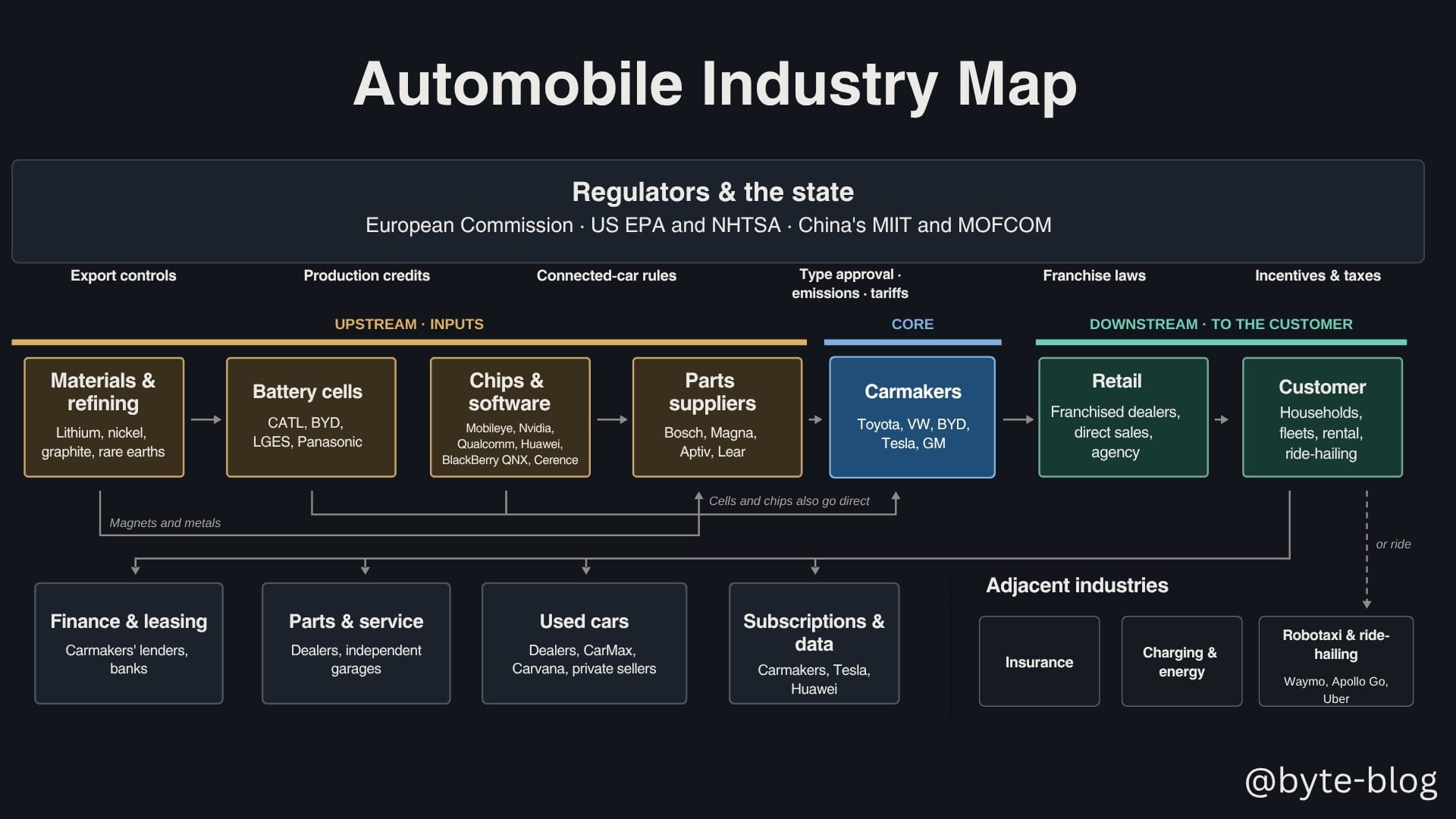
The industry structure follows the logic discussed above where we divide the structure into :
- Upstream - Inputs which focusses on the suppliers of inputs for manufacturing automobiles
- Core - Making of the automobile
- Downstream - Focus on the industry post sale to customer (financing, charging etc)
We focussed on the regulators for China, EU & US at a high level under the below headers :
- Major Regulators
- Major types of regulations
- Major regulations passed in 2025 & 2026
This week we explore the industries in the upstream section & how that part of the industry works :
Upstream – Inputs

Today's subject on Upstream industries tries to answer the question -
Where do a car’s materials come from?
Upstream industries are where it all starts & from where the OEMs or car makers get their raw or intermediate materials to assemble & manufacture cars.
Let us analyze each stage one by one :
To add structure to our discussion, we will divide the value chain into three parts:
- Battery-metal
- Magnet Chain &
- Parts Suppliers
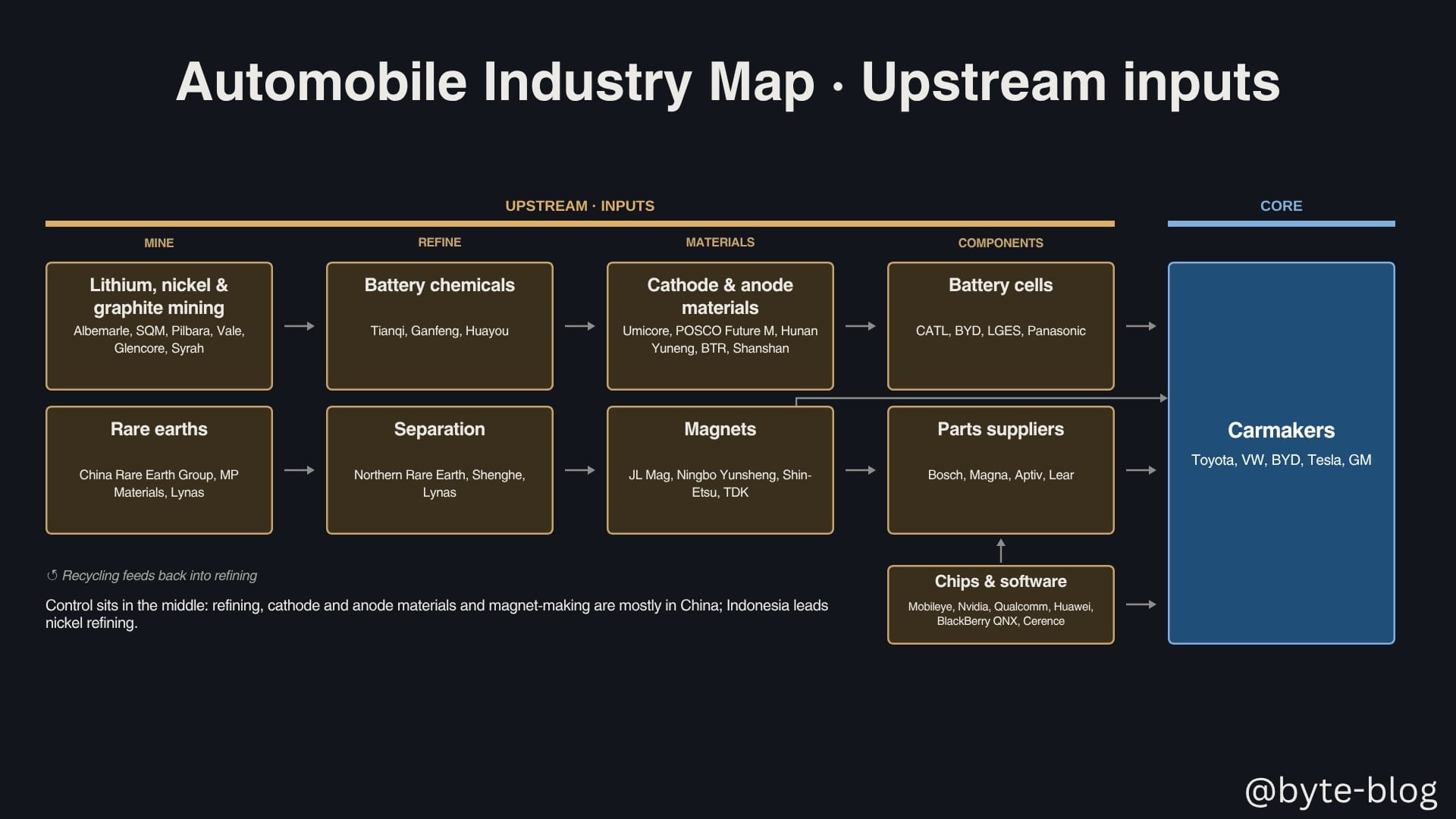
This division is in line with the flow of materials across the value chain from the mines to the car maker. Within each value chain, we will explore the various stages the materials go through as below :
- Stage 1 - Mining - what are the minerals & extraction process used?
- Stage 2 - Refining - Processes used to convert minerals to intermediate products
- Stage 3 - Materials - what comes out of the refining stage?
- Stage 4 - Components - what is the final output being used in an automobile?
Before we deep dive into the upstream portion of the industry, let us visualize it first :
Battery Metal
The battery-metal chain is the whole process from mining battery minerals like Lithium, Nickel, Cobalt & graphite into the cathode & anode powders that cell makers build into batteries for carmakers.
Stage 1 – Mining
- Lithium comes from hard-rock spodumene mines or from brine pumped from beneath salt flats and concentrated by evaporation in ponds before refining. Direct lithium extraction takes the lithium out without the ponds.
- Nickel comes from sulphide or laterite ores.
- About 99% of cobalt is mined as a by-product of copper & nickel.
- The first processing stage at / near the mine gives spodumene concentrate, nickel matte, MHP (an acid-leached nickel intermediate) or cobalt hydroxide.
- Indonesia mined about 65% (estimated) of the world's nickel in 2025.
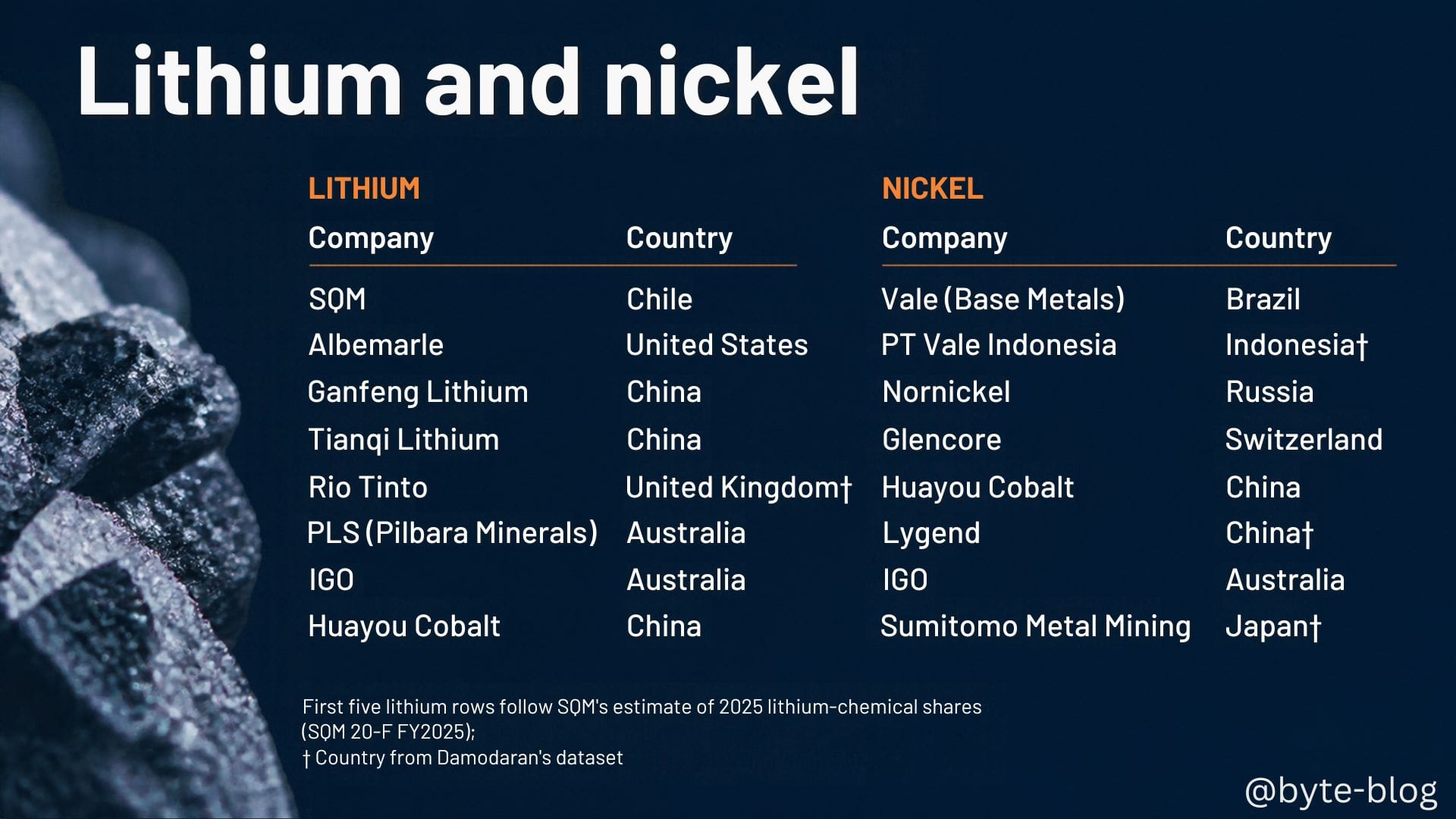
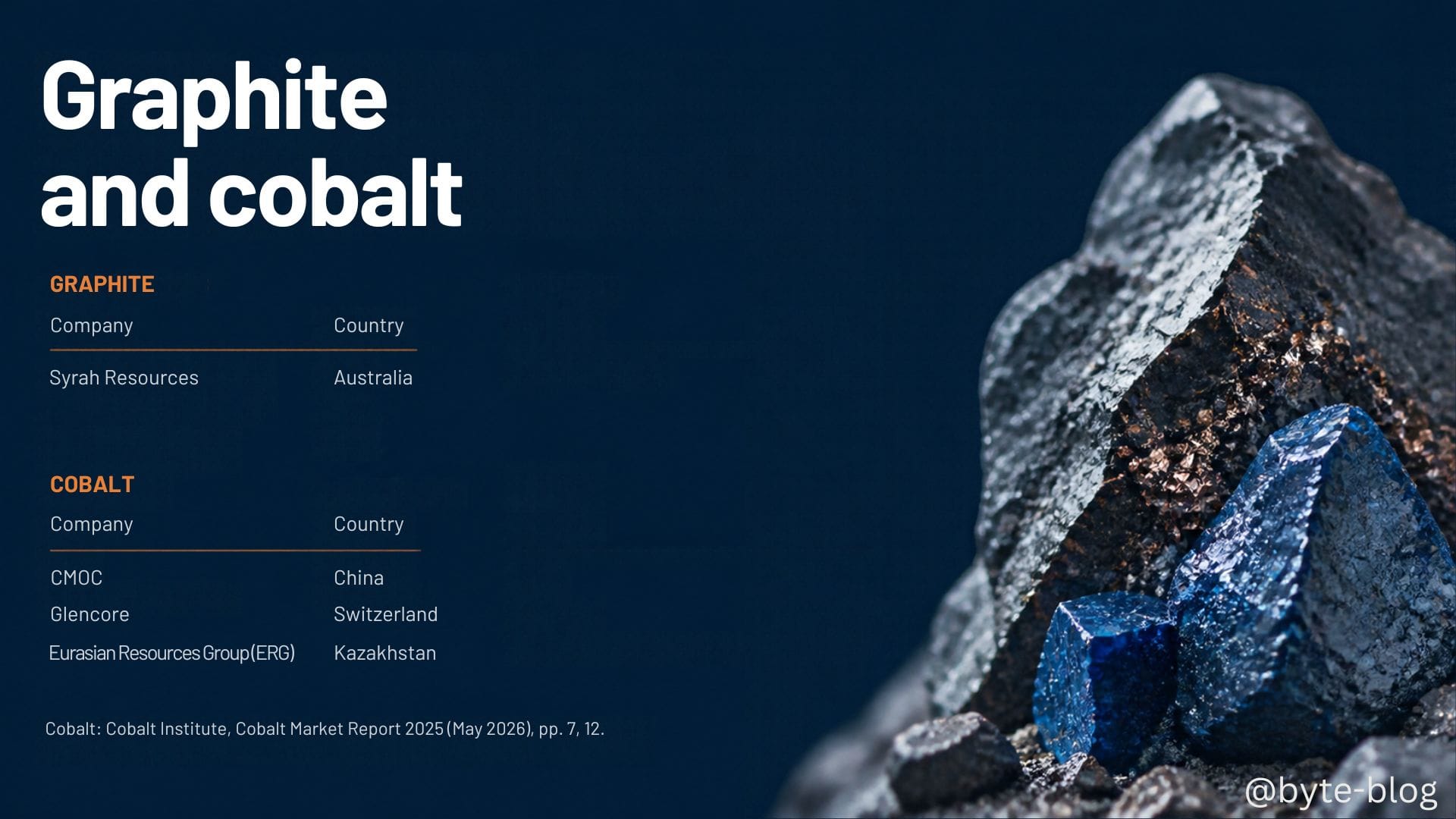
Which companies mine the battery metals, and where are they based?
Stage 2 – Refining
- Refiners make Lithium carbonate or hydroxide & nickel or cobalt sulphate. China refines about 70% of Lithium chemicals
- Another interesting aspect of refining is that recycling feeds recovered metals back into refining, today mostly scrap from battery factories; used batteries are expected to take the lead in the mid-2030s. China has over 85% of global recycling capacity.
Stage 3 – Materials
- Cathode - After refining, the chemicals first become precursor (pCAM) & then cathode powders (CAM). Over 98% of LFP cathode material, and about two-thirds of nickel-based cathode material, was made in China in 2024. Cathode material is 40 - 50% of NMC (Nickel Manganese Cobalt) cell cost & 25 - 30% of LFP (Lithium Iron Phosphate) cell cost.
- Anode - Natural or synthetic graphite is purified & shaped into anode powder. China made over 90% of anode material in 2024.
Stage 4 – Components
Cell makers assemble cathode, anode, separator & electrolyte into cells. China has over 80% of global cell capacity.
Magnet Chain
The magnet chain turns mined rare earths into permanent magnets used in EV traction motors, wind turbines, industrial motors and electronics. As in the battery chain, the rare earth minerals go through the same stages as below :
Stage 1 – Mining
The rare-earth mine produces a mixed rare-earth concentrate. China mined about 60% of magnet rare earths in 2024.
Stage 2 – Refining
- This stage mainly involves separation of the concentrate into individual oxides, mainly by solvent extraction. The main one is NdPr (Neodymium - Praseodymium).
- China does about 91% of this & Malaysia comes a distant second.
Stage 3 – Materials
NdPr oxide is turned into metal by electrowinning & then alloyed. Electrowinning uses electricity to pull a metal out of a chemical compound. A current is passed through a bath that contains the metal. The metal collects on one electrode (the cathode), and the rest of the compound breaks off at the other.
Stage 4 – Components
- Magnet - The alloy is pressed and sintered into NdFeB (neodymium-iron-boron) magnet blocks. China made 94% of sintered magnets in 2024 & Japan made about 5%.
- Motor - Magnets go into traction motors made by motor makers or Tier 1 suppliers, then into the carmaker's vehicles.
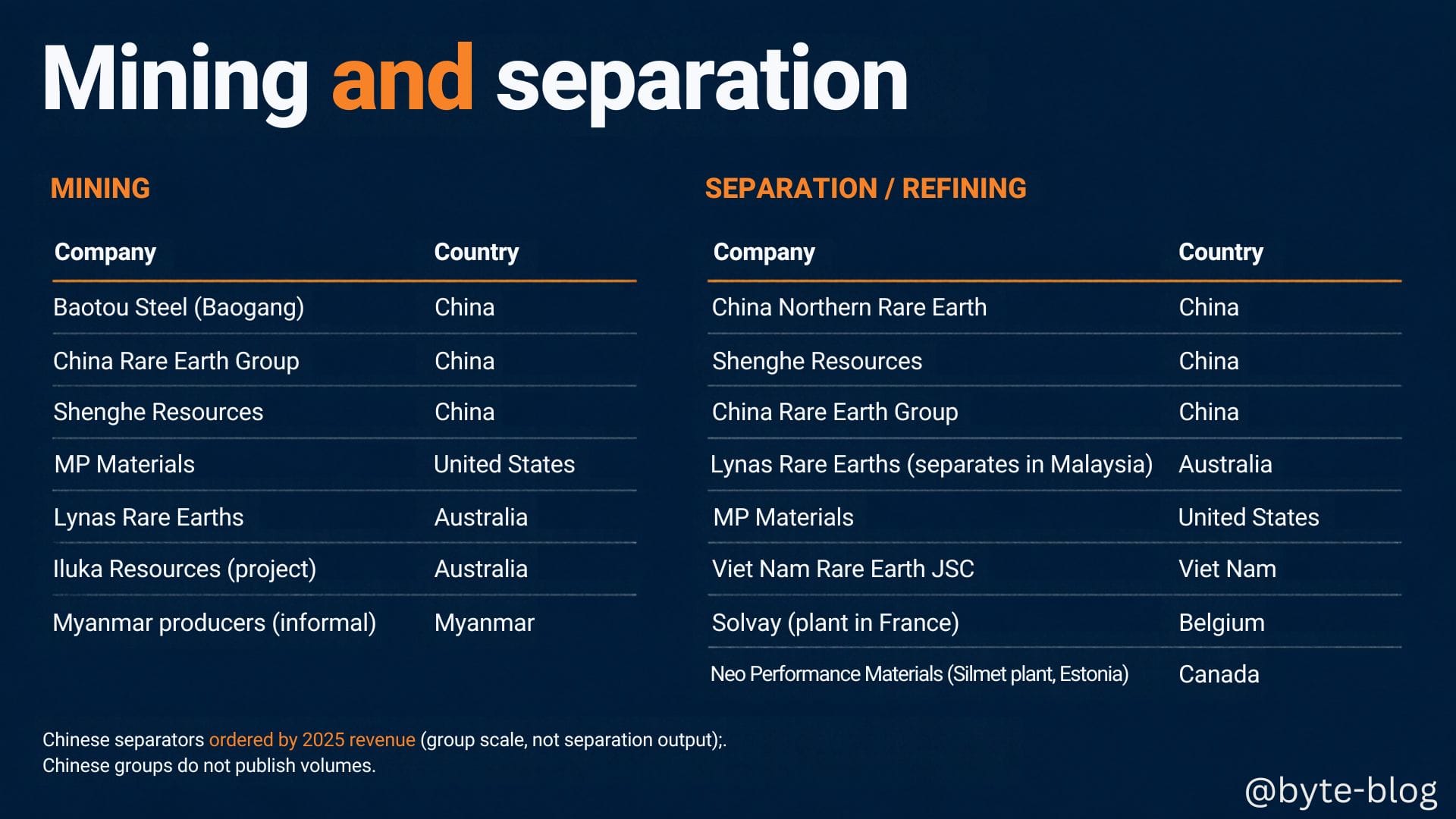
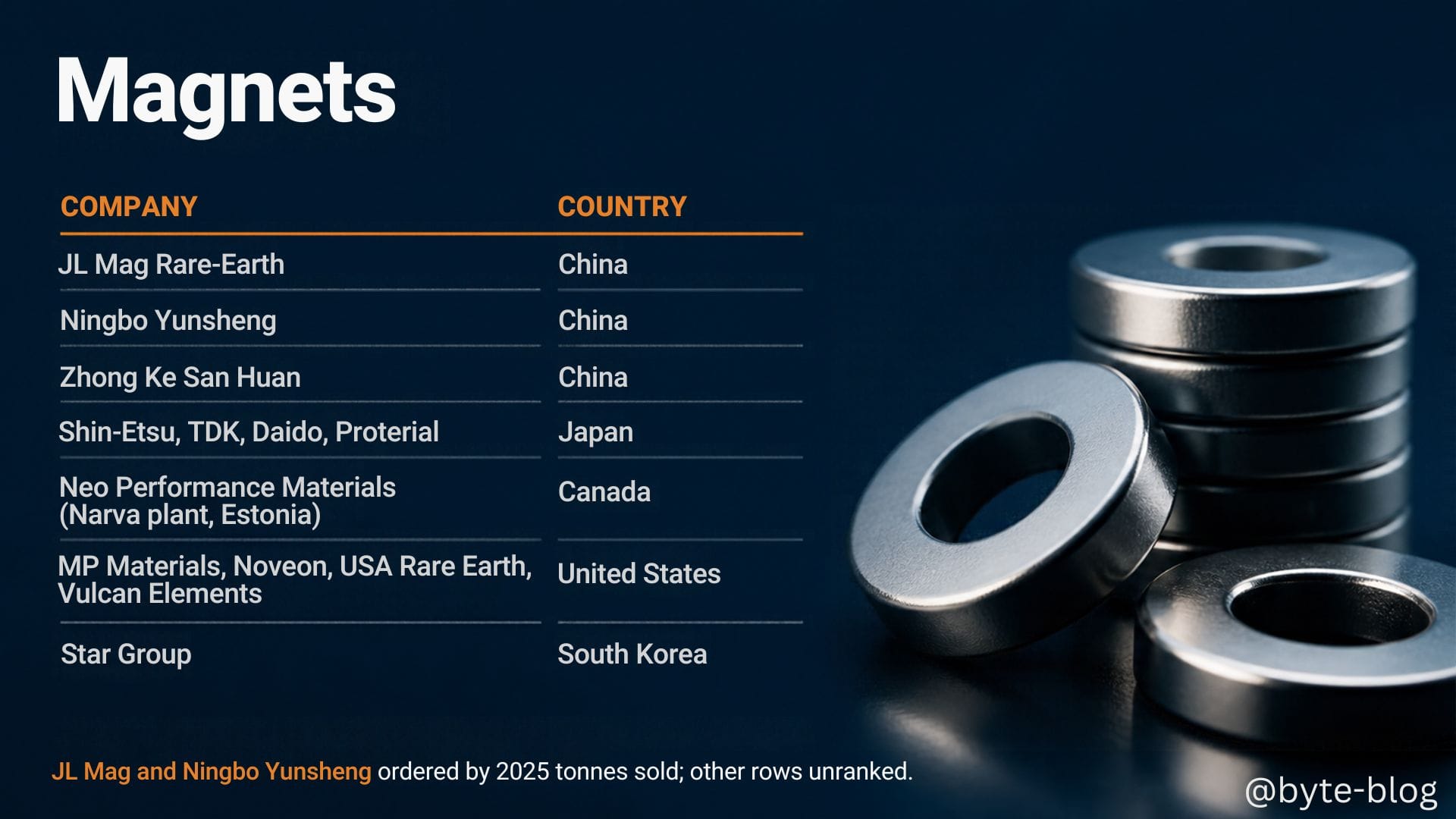
Which companies make up the magnet chain, and where are they based?
Next week, we explore Parts Suppliers.
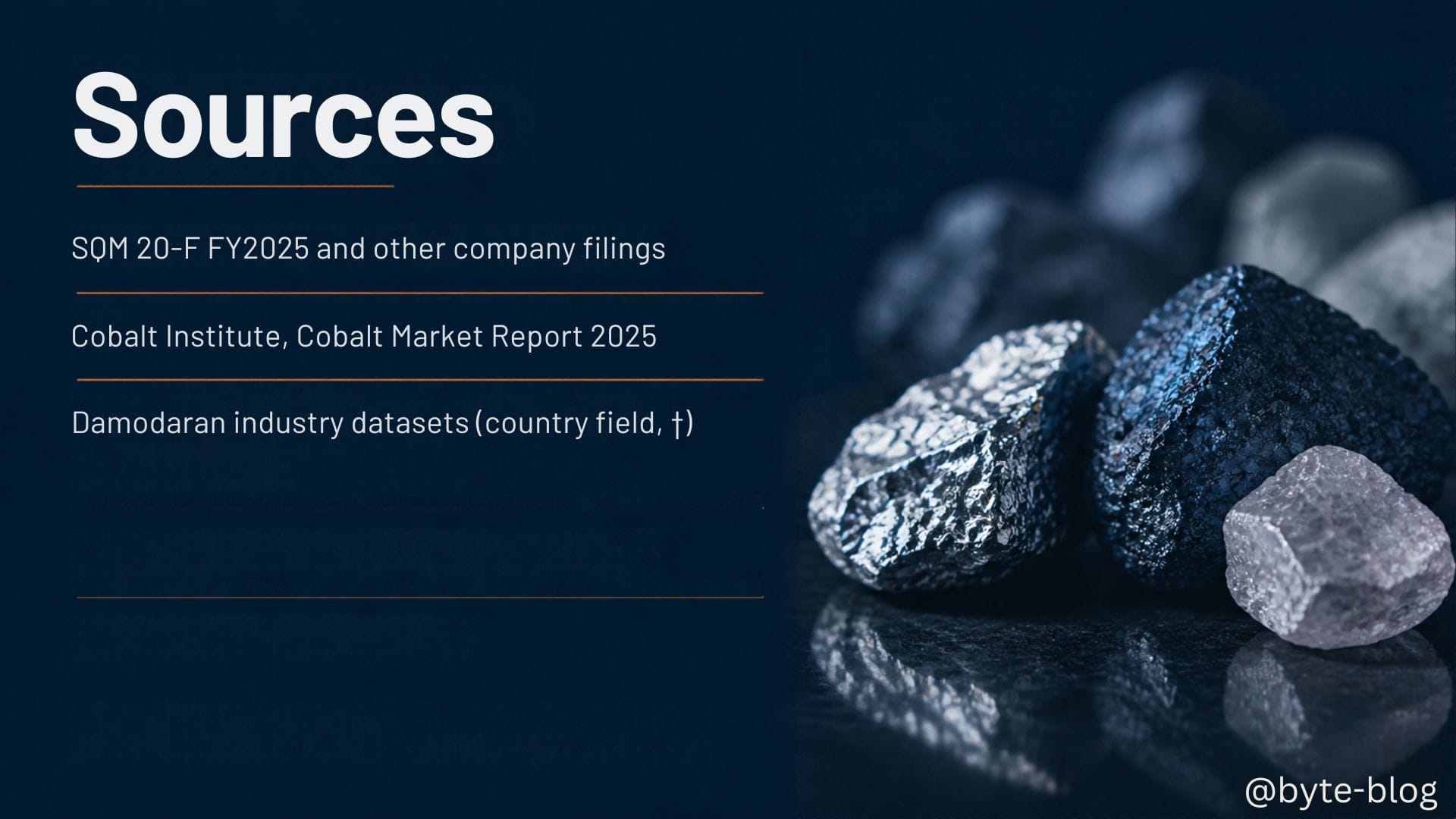
Sources & Citations
Battery metal — Mining
- Lithium from brine and evaporation ponds: SQM, Salar de Atacama Technical Report Summary (April 2023)
- Direct lithium extraction: IEA, The Role of Critical Minerals in Clean Energy Transitions (2021); Albemarle, Magnolia production and extraction
- Cobalt as a by-product of copper and nickel: Cobalt Institute
- Indonesia’s share of nickel mining: INSG, The World Nickel Market in 2026
Battery metal — Refining
- China’s share of lithium chemicals: Mercom, reporting the IEA Global Critical Minerals Outlook 2025 (May 2025)
- Recycling and China’s recycling capacity: IEA, Global EV Outlook 2026 — Electric vehicle batteries
Battery metal — Materials
- LFP and nickel-based cathode made in China: IEA, Global Critical Minerals Outlook 2025 — Beyond NMC batteries
- Cathode share of NMC and LFP cell cost: IEA, Global EV Outlook 2026 — Electric vehicle batteries
- China’s share of anode material: Mercom, reporting the IEA Global Critical Minerals Outlook 2025 (May 2025)
Battery metal — Components
- China’s share of global cell capacity: IEA, Global EV Outlook 2026 — Electric vehicle batteries
Magnet chain
- Uses of magnet rare earths; China’s shares of mining, refining and sintered magnets; Japan’s share; metal-making by electrowinning: IEA, Rare Earth Elements: Pathways to secure and diversified supply chains (April 2026), pp.26–30
- Summary: IEA, Rare Earth Elements — Executive summary
- Malaysia’s share of refining: Mercom, reporting the IEA Global Critical Minerals Outlook 2025 (May 2025)