Strategy Byte - Week 67 The Journey so far Part VII

Table of Contents
- Fiscal Policy
- Government Revenue
- Government Expenditure
- Fiscal Surplus / Fiscal Deficit
- Reasons for Government Deficit
- Types of Fiscal Policy
We continue our journey to understand strategy by looking back & reviewing our steps which will help us gain perspective on the subject & also guide us moving forward.
Last week, we reviewed a key macro-economic variable - Inflation which is defined as ongoing increases in the general price level for goods & services in an economy over time.
We then explored the underlying mechanisms causing inflation as :
- Demand - Pull Inflation &
- Cost - Push Inflation
Demand - Pull Inflation - occurs when the demand for goods & services exceeds their supply.
Cost - Push Inflation - refers to inflation caused by increase in costs of production.
We discussed Monetary Policy earlier as one of the tools a Government uses to manage the macro-economic variables in line with their stated objectives. This week, we discuss another important tool used by Governments to manage the economy - Fiscal Policy which we covered from Week 32 through Week 34
Fiscal Policy
Let us first define Fiscal Policy as below:
Fiscal Policy is the means by which the Government adjusts it's budget balance through spending & revenue changes to influence broader economic decisions.
According to mainstream economics, a government can affect the level of economic activity (generally measured by Gross Domestic Product (GDP)) in the short term by changing it's level of spending & tax revenue
In personal finance, our decisions on allocation of revenue towards investments or expenses impacts our lifestyle (spend or save more!!!), similarly, the government, through managing it's spending & revenue can impact the level of economic activity.
First, let us understand the sources of Government revenue & expenditure.
Government Revenue
Government Revenue can be classified under two heads :
- Tax Revenue
- Non-tax Revenue
Tax Revenue

A tax is a mandatory payment or charge collected by local, state or national governments from individuals or businesses to cover the cost of general government services, goods & activities.
Governments provide various public services like maintaining infrastructure, police, emergency services, defense etc & to fund those services, it mandates us to pay taxes to enable the government to continue & maintain those services.
So, how does the government actually collect these taxes? There are two methods of imposing tax revenues by the Government. These are :
- Direct Taxes &
- Indirect Taxes
Direct Taxes

Direct taxes are levied on individuals or entities based on the amount of income or profit earned by these individuals or entities over a period of time, normally one year, usually referred to as a financial year.
The rules may specify some deduction or adjustments from the income or profit to arrive at the net taxable income or profit. It is on this net taxable income or profit that tax is computed & paid. An example of a simple tax computation is shown below (though the actual computation is more complex with the number of deductions & disallowances prescribed by the tax code):
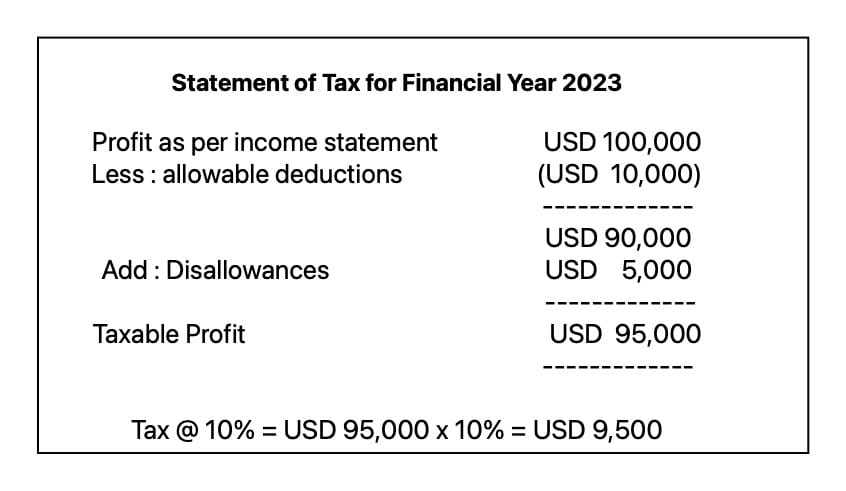
Taxes are levied directly on the individuals or entities & have to be paid by them only. The tax liability cannot be transferred to another person or entity.
Also, tax rates increase as the tax payer's income or profit increase resulting in higher tax revenues from businesses or individuals with higher profitability or income.
Indirect Taxes

Indirect taxes are taxes levied on transactions in goods &/or services & not on individuals or business entities. They are imposed on entities or individuals providing goods or services but collected from a different person or entity, usually those consuming the goods or services. Sales tax or VAT (Value Added Tax) are examples of indirect tax. For example, when a consumer purchases milk, the purchase price of milk includes sales tax or VAT which is paid by the consumer.
Non-Tax Revenue
What is Non-tax revenue?
Non-tax revenue is government revenue not generated from taxes. For e.g., toll charges for using toll roads, fines etc. They can be classified as below:
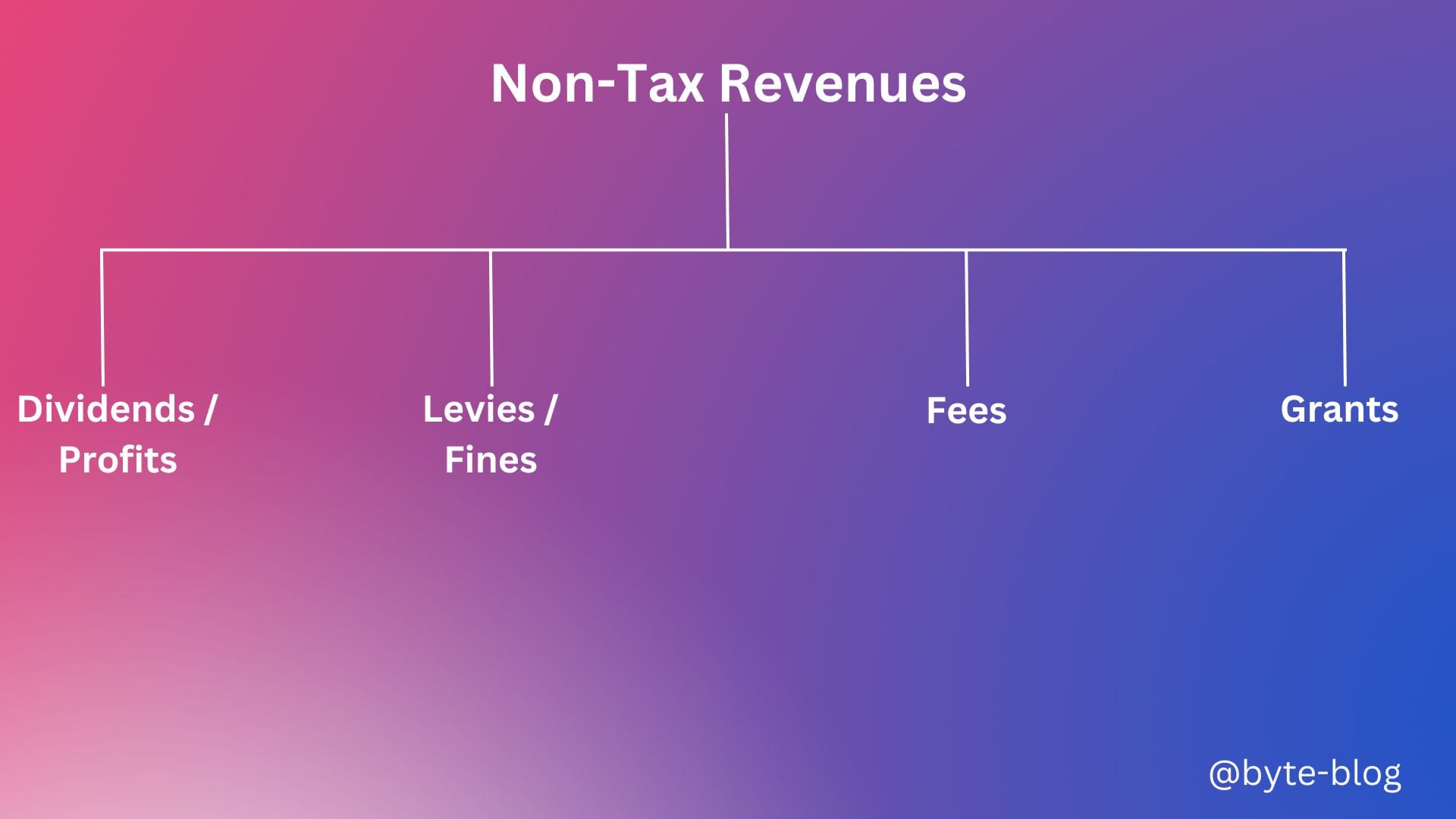
- Dividends / Profits - Includes dividends &/or profits from Public Sector Enterprises & Government entities
- Levies / Fines - Amounts collected on account of non-compliance with a regulation or rule. E.g., parking fines, traffic fines etc.
- Fees - Amounts collected for usage of rights or facilities provided by the Government. E.g., electricity charges, road & bridge toll charges, licence renewal fees, etc.
- Grants - Any donations or voluntary contributions to the Government
Now that we have understood sources of Government Revenue, let us now explore the other side of Fiscal Policy - Government Expenditure
Government Expenditure
Government Expenditure refers to all expenditures made by a Government which are used to fund public services, social benefits & investments in capital.
There are two types of Government spending :
- Government Current Expenditure - ongoing recurring expenditure to produce & provide public services, current transfer payments (spending on social benefits & other transfers), interest payments & subsidies
- Government Gross Investment / Capital Expenditure - includes outlays on long term structural & development projects. It affects the asset / liability position of the Government.
Visualizing all the above :
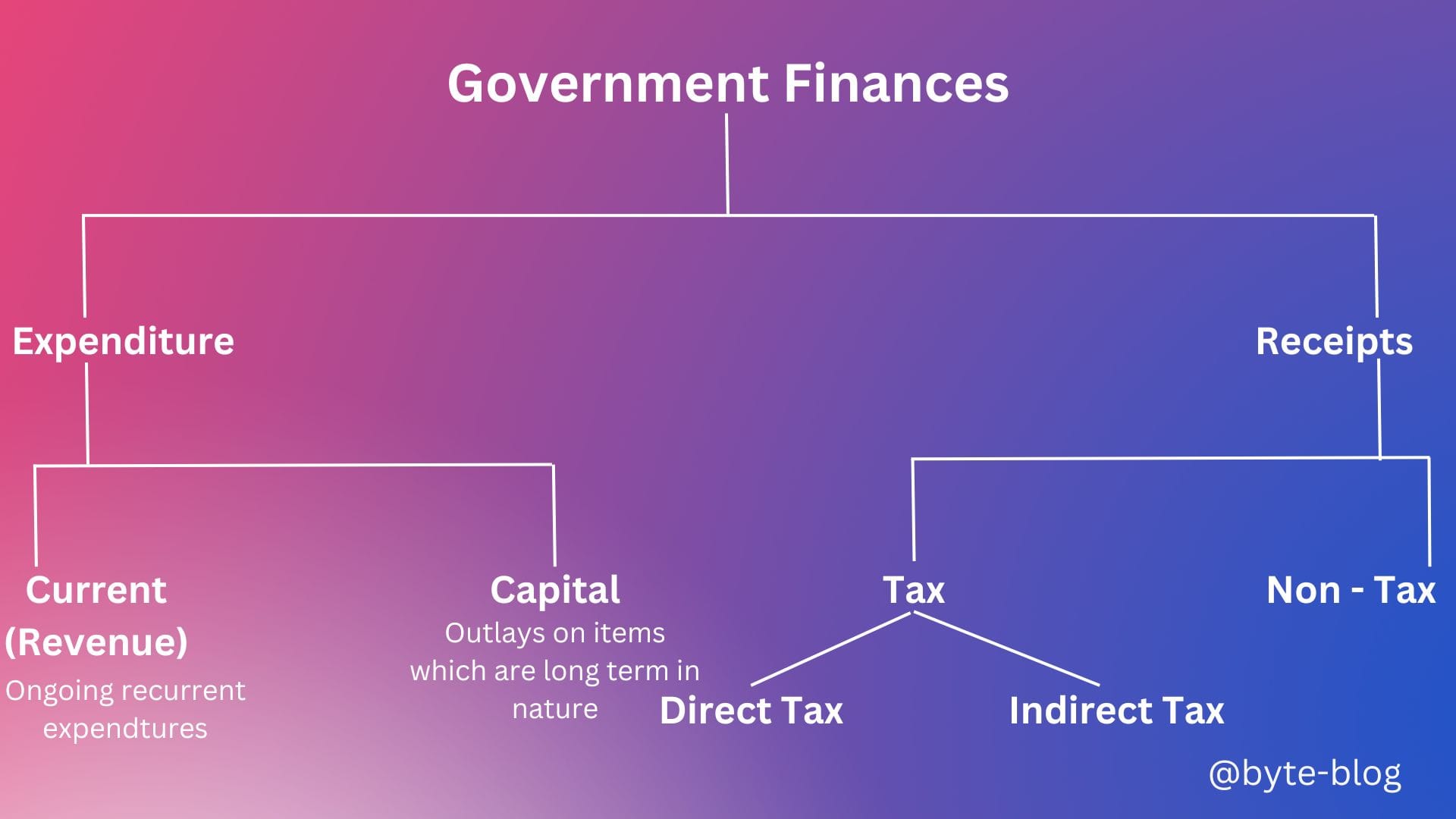
Now that we have an understanding of the structure of government finances, what happens if either revenue or expenses exceed the other? This leads us to our next topic - Fiscal Surplus & Fiscal Deficit.
Fiscal Surplus / Fiscal Deficit
The definition of Fiscal deficit / Surplus is pretty straightforward.
If Government Expenditure > Revenue, the net position is called Fiscal Deficit &
If Government Revenue > Expenditure, the net position is called Fiscal Surplus.
When a country runs a fiscal deficit, it means the government is spending beyond it's means or the revenue it generates.
The concept is the same for companies, only the terminology differs. If a company spends more than it earns, it runs into a loss while a company earning more than it spends earns a profit.
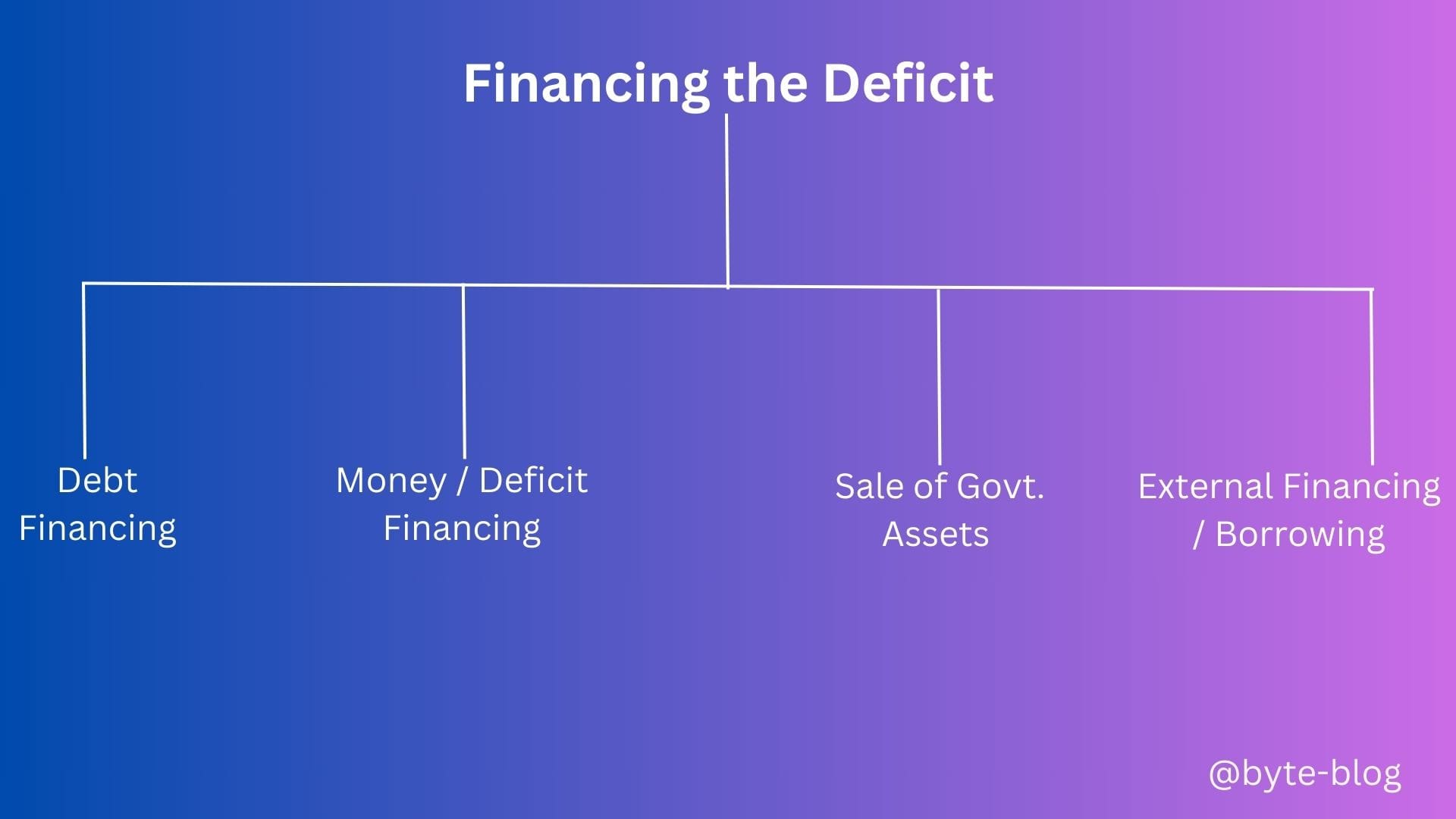
What happens when a government runs fiscal deficits across multiple years? What does an individual or corporate entity do when they spend more than their earnings or revenue? They end up having to finance that deficit by taking debt or in other words - Borrowing.
Other means of deficit financing is visualized below:
This borrowing results in what we know as National or Government Debt.
Let us see below how Governments across the world stack in terms of National Debt. National debt is tracked as % of GDP to get a proper perspective on the size of debt in proportion to a country's total economy.
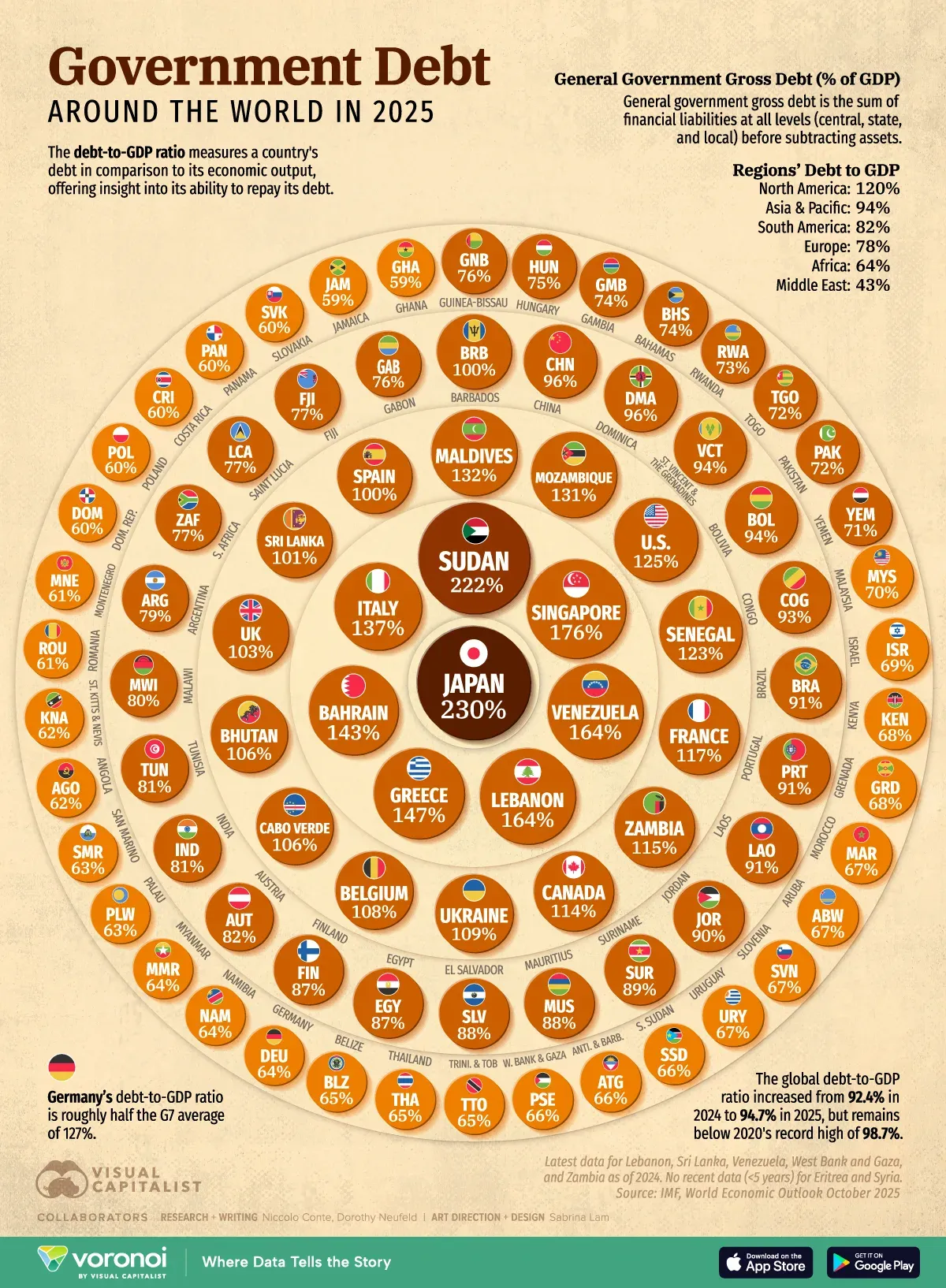
(Source : here)
"World debt is so high that 23 countries are borrowing more than their GDP, including two countries owing more than double their annual economic output.
As debt-to-GDP ratios continue to swell, servicing them is getting more expensive. Strikingly, more than 3.4 billion people live in countries where net interest payments on public debt exceed education or health funding.
This graphic shows the countries with the highest debt-to-GDP ratios in 2025, based on data from the IMF’s latest World Economic Outlook."
Singapore shows that a high ratio does not always signal trouble. The city state issues large amounts of domestic debt mainly to provide safe assets for its mandatory savings system and to deepen local financial markets, while keeping budget surpluses and strong foreign currency reserves. (Source : here)
Reasons for Government Deficit
There are four reasons why a Government budget would run into deficit :
- State of the Economy - When an economy is in decline or in other words in a recession, the aggregate demand for goods & services is less than the supply of those goods & hence individuals or businesses are unable to pay for these goods & services resulting in higher inventories, job losses & business closures. Thus, overall income levels in the economy decline and tax collection suffers. To mitigate this, government expenses related to uplifting the economy increases (infrastructure spending, unemployment insurance, other social benefits etc). This causes deficits to increase. Conversely when the economy is going strong or in other words in a boom, the income levels increase & the aggregate demand increases & businesses have to increase supply to meet demand. Tax revenues increase & spending does not have to increase as the economy generates enough revenue to cover those costs. This causes deficits to shrink
- Tax Policies - Inefficient tax policies & governance mechanisms can result in lesser collections than what the tax base can provide. To mitigate this, Governments enact tax policies in line with their objective of increasing their tax base & boosting collection efforts to shrink deficits. For e.g., The recent efforts by GCC economies to implement various tax laws (VAT, DMTT, CIT etc) to boost revenue collection are notable examples.
- Subsidies, Military & Social Programs Spending - Increased spending on public services, military & social services causes expenses to increase causing deficits to rise depending on the security situation of a country.
- Unexpected Events - Unexpected events like war or natural disasters can cause budget deficits to skyrocket due to expenses required to repair the damage done to the economy.
Types of Fiscal Policy
From the above we can conclude that through Fiscal policy, Governments seek to smooth the economic cycle. How?
- When an economy is performing well but has a risk of overheating, cooling measures are initiated like increasing taxation, reducing spending etc. This policy is called Contractionary Fiscal Policy. This is because increased taxation & reduced spending will leave less money in consumer pockets which will cool down demand for goods & services which in turn will cool business activity resulting in lower employment etc.
- When an economy is not performing well, measures are initiated to stimulate the economy through tax cuts, increased spending etc. This is called Expansionary Fiscal Policy. This will result in more money in consumer pockets for them to spend, increasing demand for goods & services which in turn increases business activity, higher employment etc.
Why do we care about the macro-economic variables that we revisited over the last couple of weeks?
That is because these external macro-economic environmental variables impact economic performance & affects something known as SUPPLY & DEMAND.