Strategy Byte - Week 74 Industry Analysis

Table of Contents
- Recap
- Industry
- Sector
- Industry Analysis
- Systems Thinking
Recap
During Week 73, we started our journey to understand industry analysis by answering the WHY - WHY do we do industry analysis?
- The first & most important reason being that a company exists in an ecosystem where it interacts with other players in the industry & it's actions are shaped by how other companies act.
- Understanding the industry or "Where to Play" when drawing up a strategy is important to ensure it can decide on the correct "How to Win" actions.
- It reveals key advantages & constraints about the industry
- Industry analysis guides strategic action in :
- Positioning a company & it's products keeping in mind it's competitive advantages
- Guarding against disruptive forces brought about by competitors or external environmental variables
- Identifying customer segments to serve
- Identifying whether the industry itself is subject to disruption internally or from external environment variables like technology
It is more like understanding the lay of the land & hence a key component of strategy.
Then we explored the relevance of Industry Analysis under two perspectives :
- As an Operator &
- As an Investor
As an Operator
As an Operator, understanding a company's position in the industry & in comparison with it's peers is very important. Some of the questions they have to tackle are :
- Is the company improving it's stand in the market?
- How are customers perceiving their products or services compared to their competitors'?
- What is the financial position of the company vis-a-vis their peers ?
- Are they managing their operations more efficiently compared to their competitors?
As an Investor
As an Investor, understanding whether it is worth it to invest in a company is important. Some of the key questions they have to tackle are :
- Is the company performing at par, below or better than competitors ?
- What is the earning potential of the company & the industry?
- Based on the above, should I invest or not?
- If yes, how much money can I commit for the returns promised?
Before we get into industry analysis, let us understand what is an Industry?
Industry
Industry refers to a specific group of companies that operate in a similar business sphere & have similar business activities. (Source : here)
So, an industry means a cluster of companies doing similar business activities which means they produce similar or comparable goods or services to customers. Examples of industries include Banking, Advertising, Entertainment, Healthcare, Retail, Telecom, Technology etc.




Companies within a particular industry often respond in similar ways to macro economic changes. For e.g., The Banking industry responds to interest rate changes by revising base rates which subsequently impact their lending & deposit rates. Interest rate changes impact other industries differently in that it impacts their borrowings or investments which causes them to respond in ways to mitigate any negative impact or take advantage of any positive impact.
Sector
Similar industries are grouped upward to form a Sector.
Sector refers to a part of the economy into which various industries consisting of a greater number of companies can be fit, & is larger in comparison. (Source : here).
For e.g., Transportation sector includes automobile, airline, trucking industries etc.
Now that we know what an Industry or Sector is, let us understand what analyzing an industry mean.
Industry Analysis
Industry Analysis is a market assessment tool used by businesses & analysts to understand the competitive dynamics of an industry. It helps them get a sense of what is happening in an industry, e.g., demand-supply, degree of competition, future prospects etc. (Source : here)
There are multiple perspectives or layers from which we can do industry analysis. I will take this discussion in two layers -
- Business or Non-Financial Layer
- Financial Layer
The concepts are like two layers interacting but not mixing with each other - like oil & water. The concepts will be discussed separately but actually are interwoven in reality.

Layer - 1 : Business or Non-Financial Layer
This layer involves understanding at a minimum
- The industry structure - meaning how the industry is structured from beginning to end in the value chain
- Who are the players in the value chain?
- At what stage is the industry in - is it growing, matured or in decline?
- Who are the competitors within the industry? What are their likely reactions to new developments in the market?
- What are the regulations governing the industry?
- What are the customer segments & how do these segments impact products or services provided that industry?
- What value add are these products or services providing to customers?
Layer - 2 : Financial Layer
This layer involves understanding at a minimum
- The unit economics of the industry - which means the cost & revenue patterns in that industry & the business drivers behind those patterns
- The margins earned by the players in the value chain & the potential for sustaining or improving these margins
- Which players in the value chain capture the value generated across the value chain?
As I mentioned before, in reality the above two layers are inseparable but for our discussion, we will tackle them separately in the next couple of weeks to understand the underlying dynamics of each layer.
We now need a mental framework to understand the intricacies of industry analysis. For this, we will use "Systems Thinking".
Systems Thinking
We will not get into details of Systems Thinking here (you can refer Week 3 of Finance Bytes for more in-depth discussion).
What is a System?
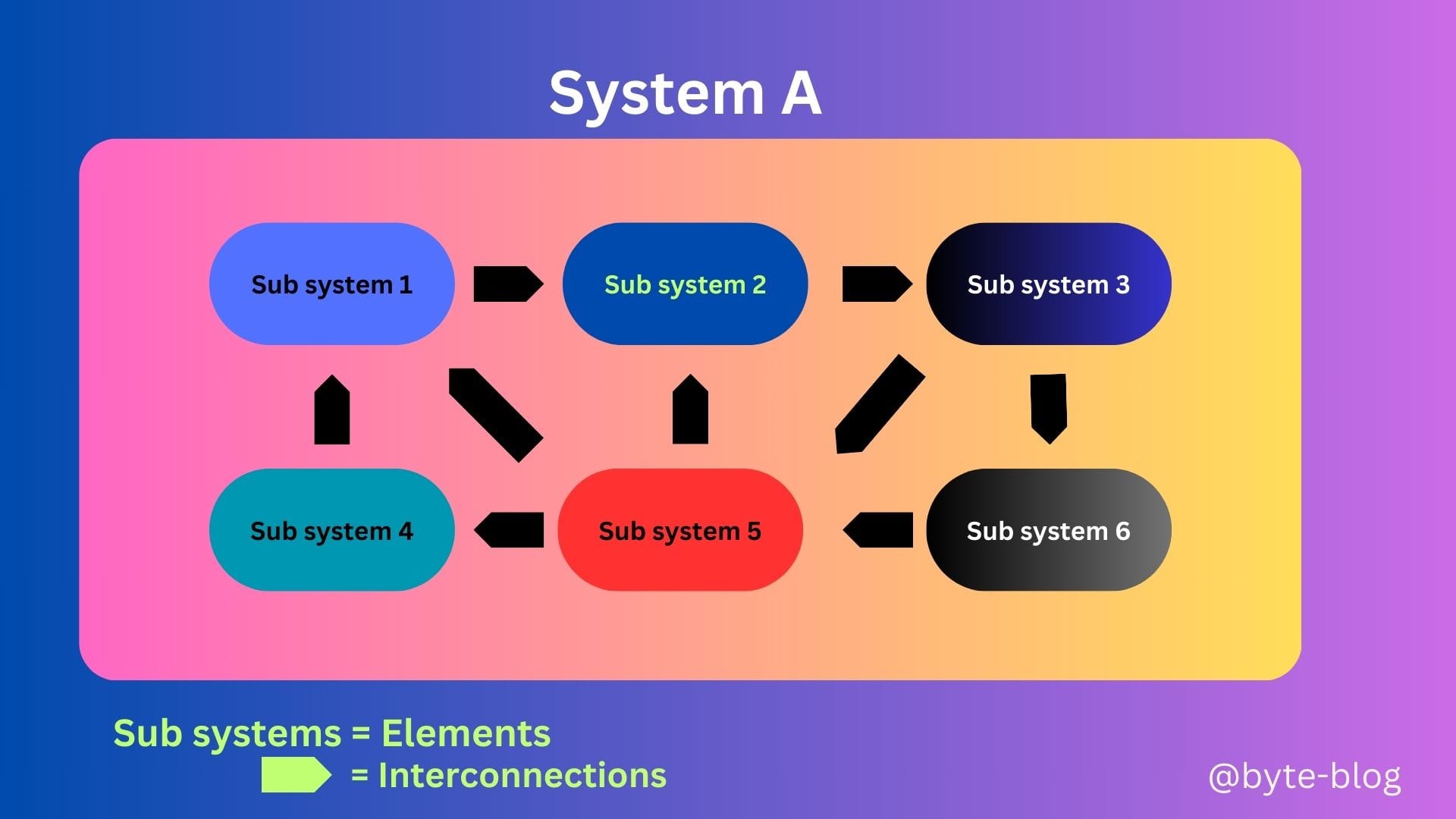
"A System is defined as an interconnected set of elements that are coherently organized in a way that achieves something" (Source : Thinking In Systems)
So, a System consists of :
- Elements
- Inter-connections &
- A Purpose
To put it simply, the different units or sub-systems (Elements) interact with each other through connections between them (inter-connections) to achieve a goal or objective (Purpose).
Well, how is Systems Thinking relevant to Industry Analysis?
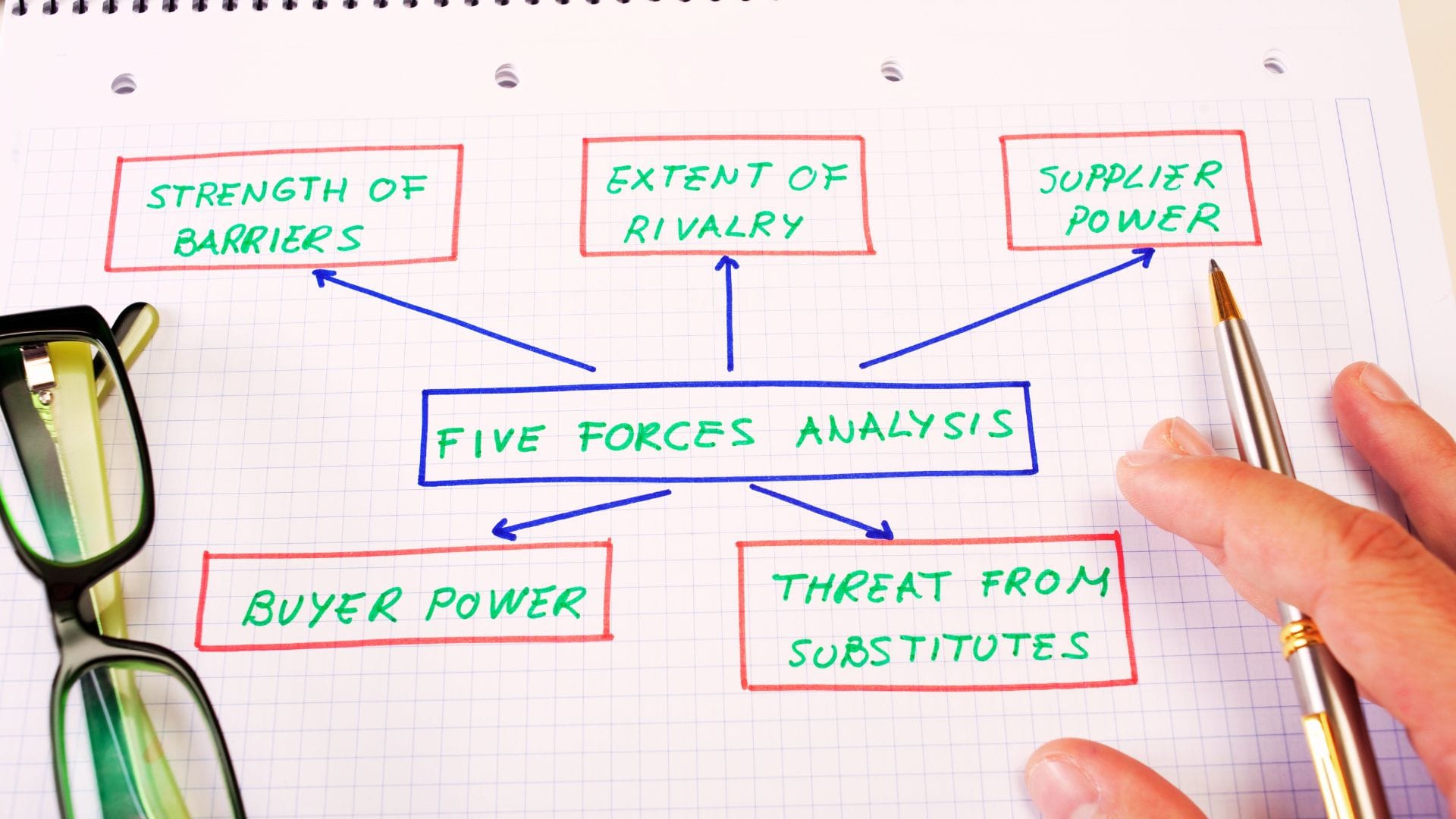
Let us take the below visual for Michael Porter's Five Forces :