Strategy Byte - Week 76 Value

Table of Contents
- Recap
- What is Value?
- Customer Perspective
- Perception vs. Value
Recap
During Week 75, we explored Porter's Five forces which is the foundational framework in strategy from Michael E Porter -
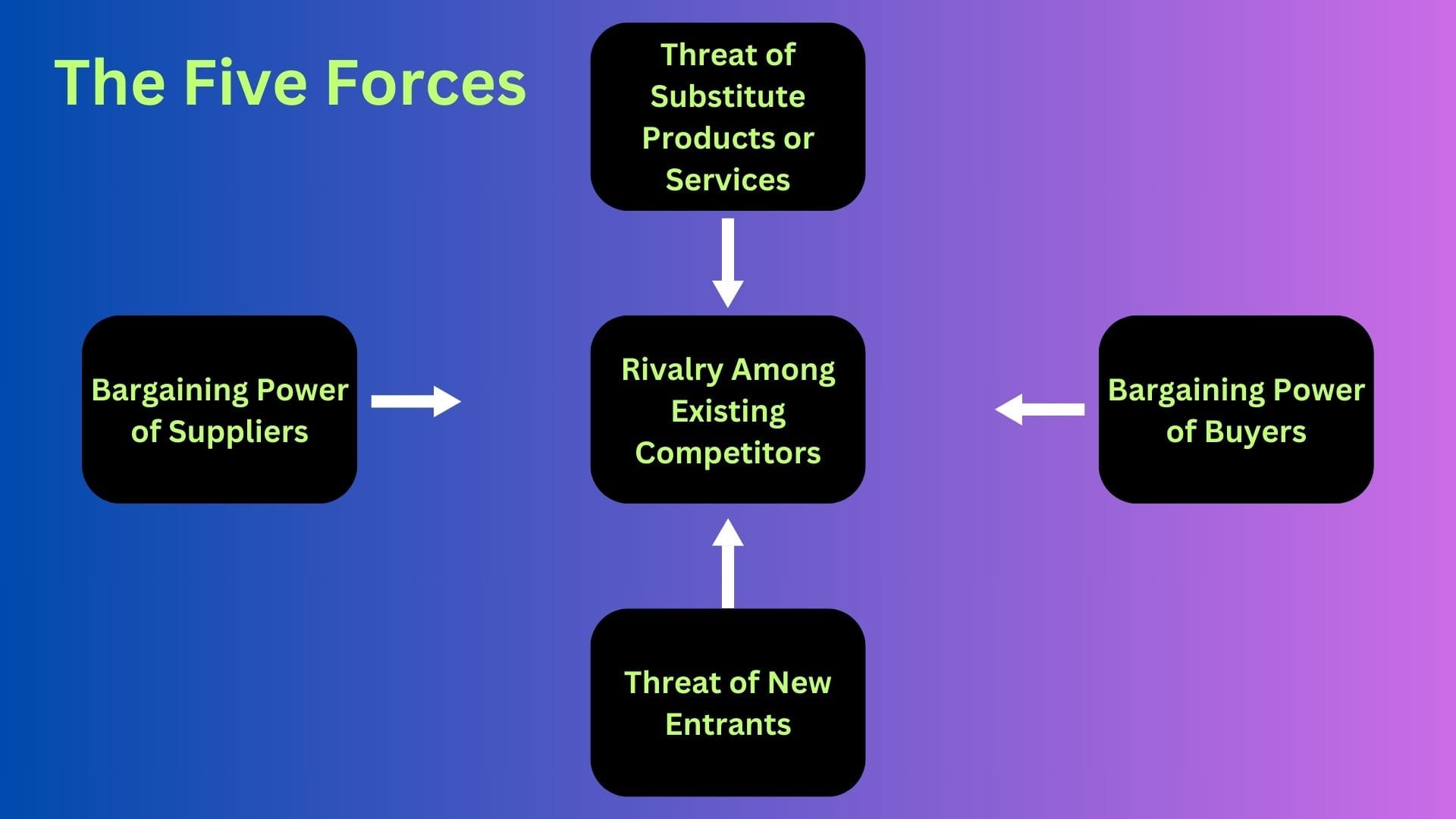
Porter's Five Forces is a framework for understanding the competitive forces at work in an industry, & which drive the way economic value is divided among industry actors.
Key words to focus on :
- Understanding the competitive forces
- Driving & dividing economic value among industry actors
Understanding Competitive Forces
No company functions in a vacuum. All companies exist within an ecosystem of competitors, suppliers, customers, government, economy etc. Understanding competitive forces means understanding the lay of the land (industry structure & composition) or the forces driving the industry along with it's key players.
Without knowing the environmental factors driving the industry & the key players, their products, a company's positioning & strategy is bound to fail.
The environment (Where to Play) & the interactions determine what choices & trade-offs a company makes to drive & achieve it's strategy (How to Win)
Capturing Economic Value
We will go into value in a bit. The question here is "Who captures the maximum value generated in an industry?" - Is it the industry players, the suppliers or customers? How are they all related and how these relationships impact their choices?
Porter's Five Forces tries to capture these relationships & interactions to identify which of these impact a company more so it can position itself better to capture maximum value.
We can think of an industry as a system of :
- The company
- Suppliers
- Competitors
- Customers &
- Products
We visualized the framework as below & explained the concept through an example of a gourmet burger chef in a food festival.
This week, let us understand the core concept underlying any Strategy - Value.
What is Value?
What comes to our mind when we think of value?
- Price Paid?
- Utility to customer?
- Difference between selling price & cost?
There are multiple thoughts that come to mind when we think of value. It can be thought of from the perspective of
- A Customer or
- The Company

Customer Perspective
Roger L Martin said "The customer determines value, not you (the company)" or in other words "Value is measured by the price the customer is willing to pay. It doesn't matter what you think the value is".
So, Value is a perception formed by a customer. Customer perception of value is based on it's utility to the customer or in other words, how useful a product or service is to the customer & helps the customer achieve their objective(s).
To understand this more deeply, let us understand two concepts from classic economics - Utility Theory & Marginal Utility
Utility Theory
Utility Theory is a framework in economics that assumes humans make choices rationally to maximize their total satisfaction or happiness. But what is utility?
Utility is a subjective measure of pleasure, satisfaction or usefulness. (Source : here)
Early economists tried to measure utility objectively. However, it is now increasingly recognized that utility is entirely subjective & dependent on the particular situation. For e.g., a bottle of water that we drink at home or in office has low utility compared to near infinite utility when stranded in a desert.


Marginal Utility
Total utility is the total or cumulative satisfaction a customer gets from consuming a certain amount of goods. Marginal Utility is the ADDITIONAL satisfaction gained from consuming one more unit of that good. (Source : here)
The more critical concept from theory of marginal utility from a strategy perspective is the Law of Diminishing Marginal Utility which states that as a customer consumes more of a good, the additional satisfaction from each successive unit decreases.
Why do we care about classical economic theories on utility when we are discussing value? Let us take the example of Netflix :

We normally don't watch the same movie or series multiple times. The marginal utility of watching the same movie or series goes down to zero after one or two times of watching it. To get over this decrease in marginal utility, the algorithm constantly surfaces new movies or series tailored to your interests, effectively resetting your marginal utility curve to ensure your satisfaction on a continuous basis.
Perception vs. Value
When we decide to buy something, say a TV, we decide in advance or at least research on which brand we want to buy depending on our expectations, wants & requirement. What we ultimately buy depends on our perception of how much the product satisfies our expectations, wants & requirements.
Based on this perception of what the product provides, customers assess the value of the product. What does this value mean?
This paper uses classical economists' distinction between
- Use Value &
- Exchange value
Use Value refers to the specific qualities of the product perceived by the customer in relation to their needs. E.g., TV screen size - 55 or 65 inch, OLED screen etc. Judgements about use value are subjective depending on individual customer needs or Use value is perceived by the customer.
Exchange Value refers to Price. It is the monetary amount realized at a single point in time when the exchange of goods take place.
What is the relevance of this in our discussion on Strategy?
Perceived use value can be translated into monetary terms - It can be defined as the price the customer is prepared to pay for the product if there is a single source of supply (Source : here)
The Exchange Value is based on customers' assessment of the product value & how much they are WILLING TO PAY.
Willingness to Pay is a foundational concept. Revisiting our quote from Roger L Martin - Value is measured by the price the customer is willing to pay for your offer. And the value that matters most is the value to the customer to whom you sell your offer.
Let us dive deeper next week.
