Strategy Byte 81 – Profit Pools - Part 1
Where value is captured in an industry. A café example links value creation, pricing and capture, and contrasts profit pools with Five Forces.

Table of Contents
- Recap
- Profit Pools
- Coffee & Cafe
- Five Forces vs. Value Capture
Recap
During Week 80, we discussed Industry evolution which means an industry can be at different stages of it's life cycle just like any biological organism. The different stages are :
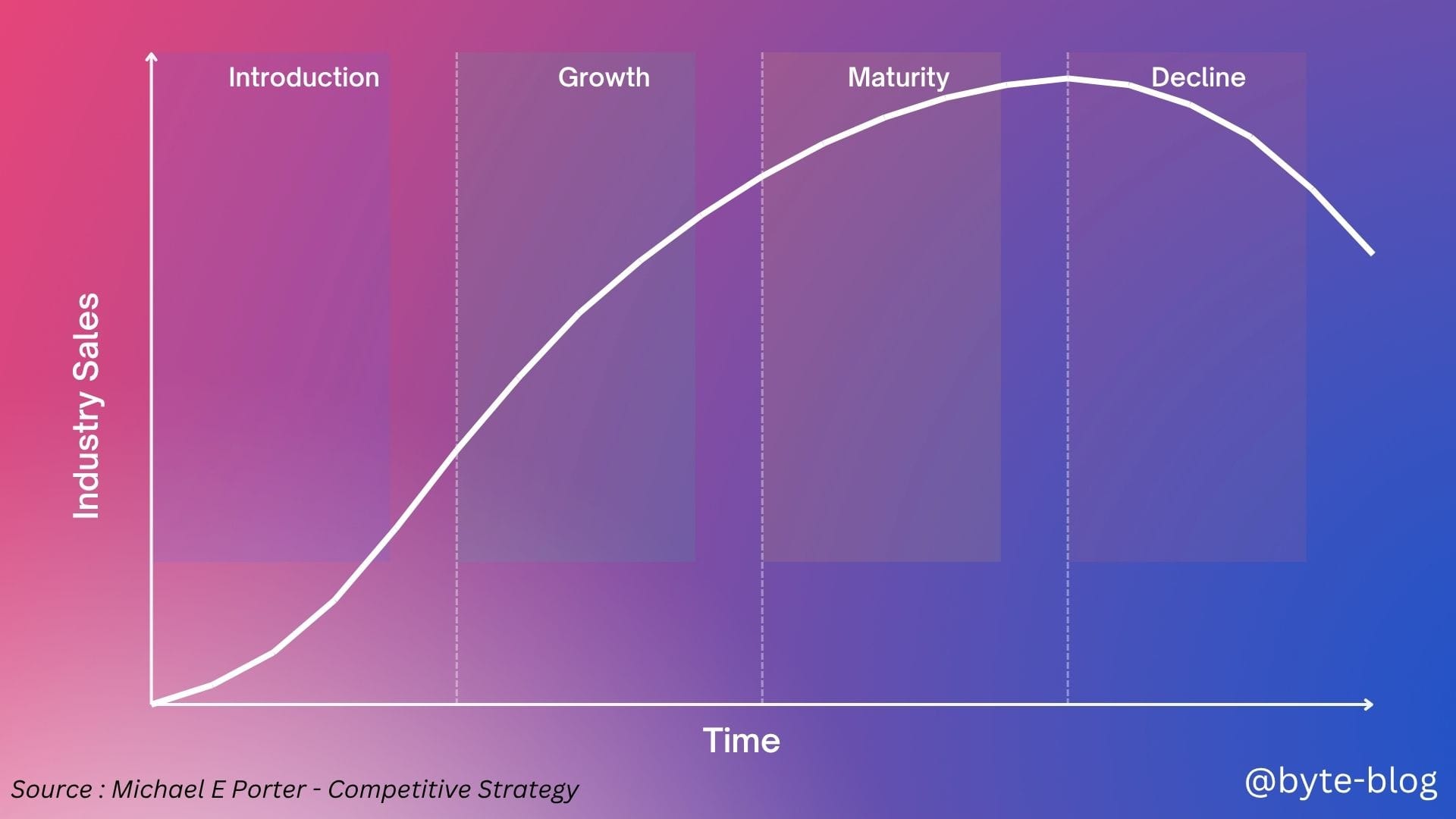
Why is understanding industry stage important from a strategic perspective?
- It influences the attractiveness of the industry for investment purpose. Early stage introduction & growth industries attract higher investments
- Understanding the nuance behind the stage at which an industry is in. An industry may appear to be in decline but may be evolving to a new state. For e.g., automobile industry evolving from traditional cars to EVs.
- The interaction of Five forces will be different at each stage of the industry which in turn impacts the value captured by each player.
- Understanding how an industry is evolving & at which stage is it in is critical in predicting changes so necessary action can be taken to benefit from those changes in time as the cost of reacting to those changes increase as the window closes.
Every industry begins with a set of interactions between the Five Forces as it comes into existence. The evolutionary process work to push the industry towards changes as time moves forward.
Then we explored another take by Roger L Martin on industry evolution classifying it from pre-competitive to competitive.
He says that "Industries go through a particular transformation that typically isn’t obvious until after it happens. However, the transformation is deadly to most players that are there at its start."
When an industry crosses over from pre-competitive to competitive, some player — either from inside or as a new entrant — takes an action that precipitates a transformation, one that rarely stops after it gets started & endangers the survival of firms caught unaware. The action is to push a scale button in a way that makes remaining a small player nearly or entirely impossible.
This week, let us discuss another concept called Profit Pools
Profit Pools
During Week 78, we touched upon value capture. We know that at a foundational level, the strategy of any firm is to create value to customers & sustain that value creation. However, the value creation process has meaning only if the firm is able to capture that value created.
How is this value captured? A firm captures value through proper pricing of it's products & services.
Now, in any industry, there are industry participants & competitors. Through Porter's Five forces, the interactions between these participants result in some of these participants capturing more value compared to the others. What does this mean?
It means participants with stronger bargaining power or control over scarce, hard to replace assets tend to capture larger share of the value created - or in other words, tend to have higher profitability compared to other participants with little or no such advantages.
Let us explore deeper.
Coffee & Cafe
Let us take the example of a cafe. Who doesn't have coffee nowadays!! Sitting in a cafe either with or without a laptop & having great coffee is a relaxing way to pass time.

Let us assume a customer paying USD 2.50 for a latte. Let us see who are the participants capturing value across various participants. As a recap, take a look at the below images from Week 78 on value creation & capture from a customer & firm perspective before proceeding further :
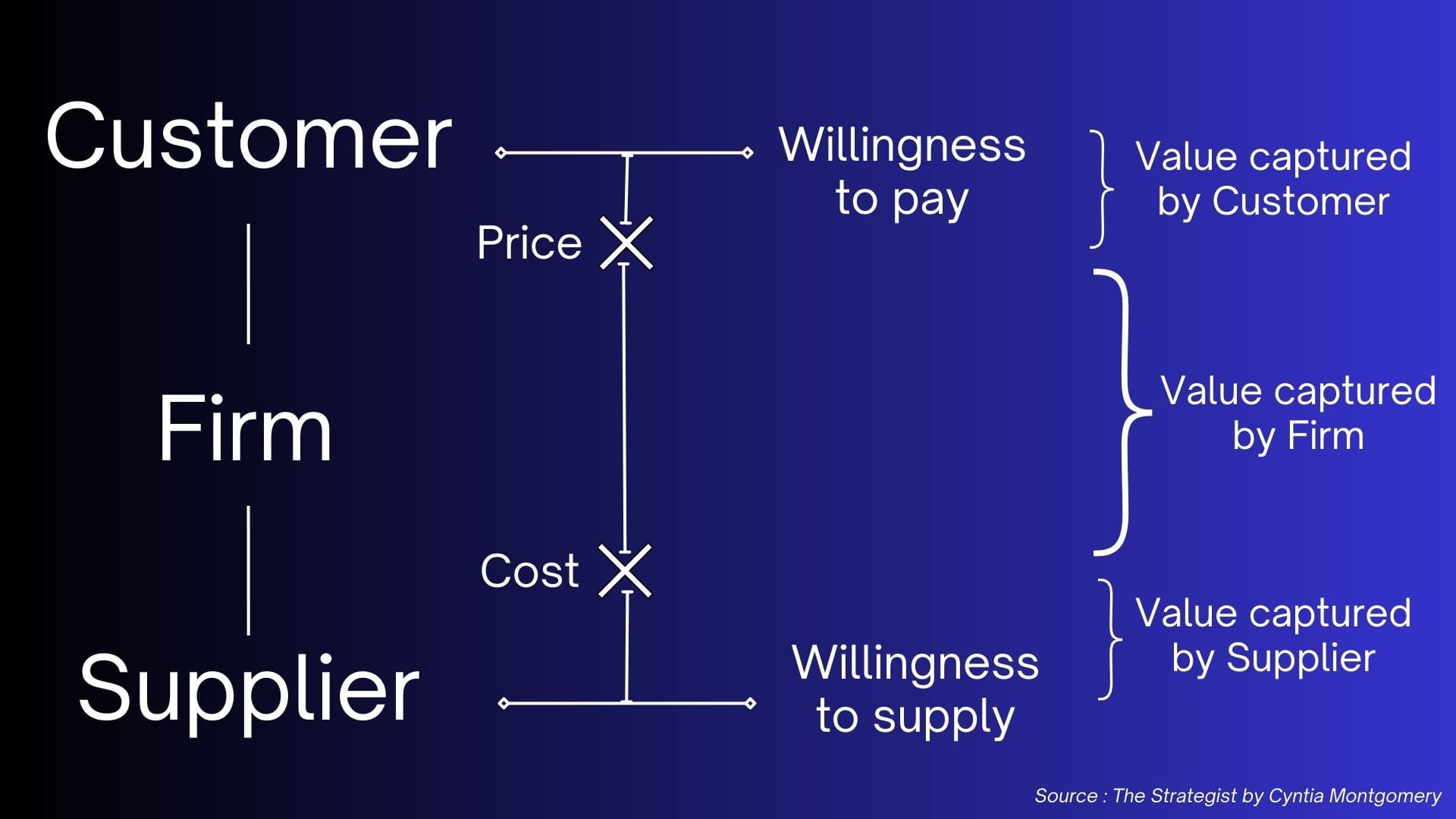
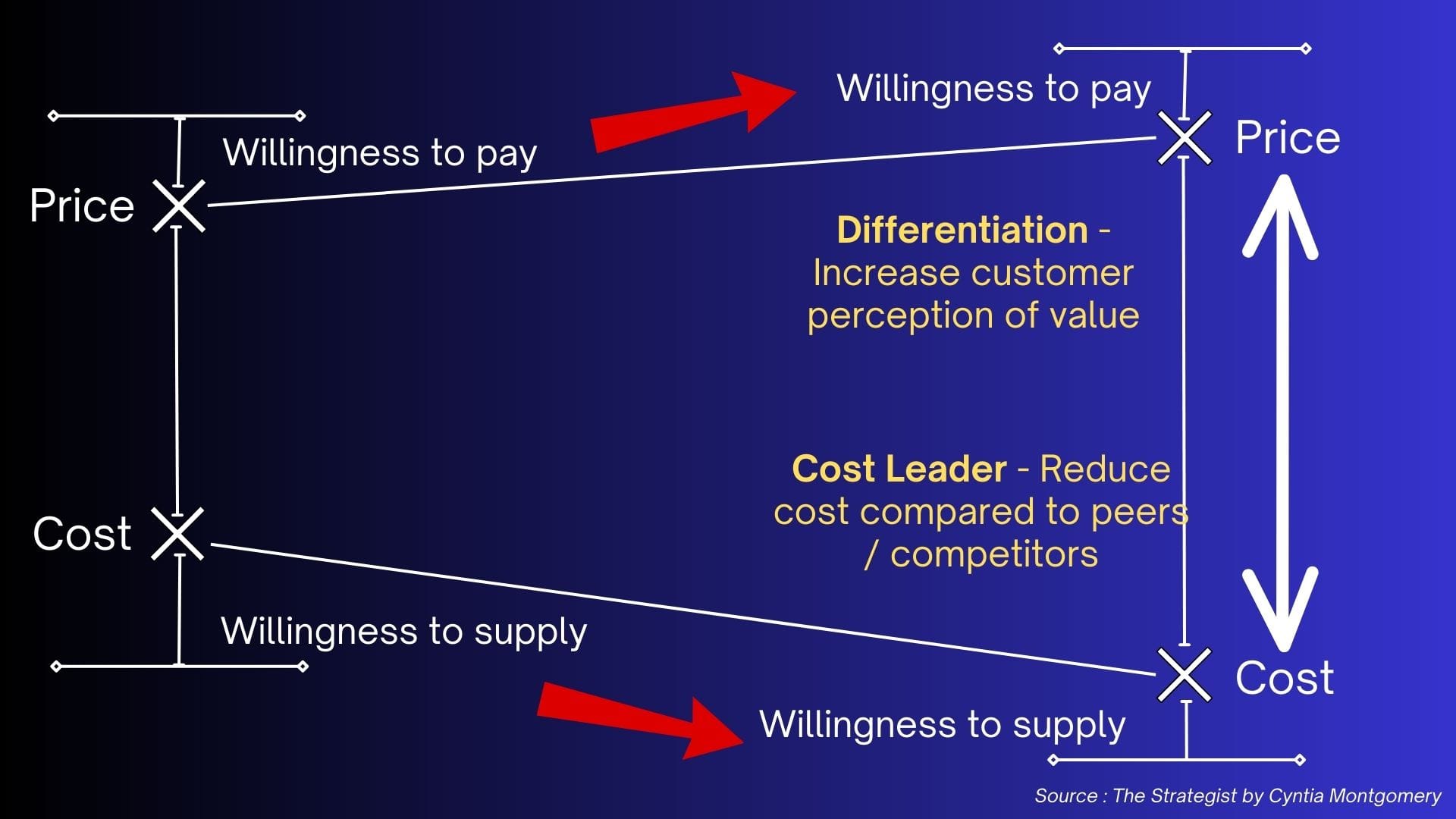
Now, returning back to our latte example, let us see at a high level how each player in the coffee industry captures value.
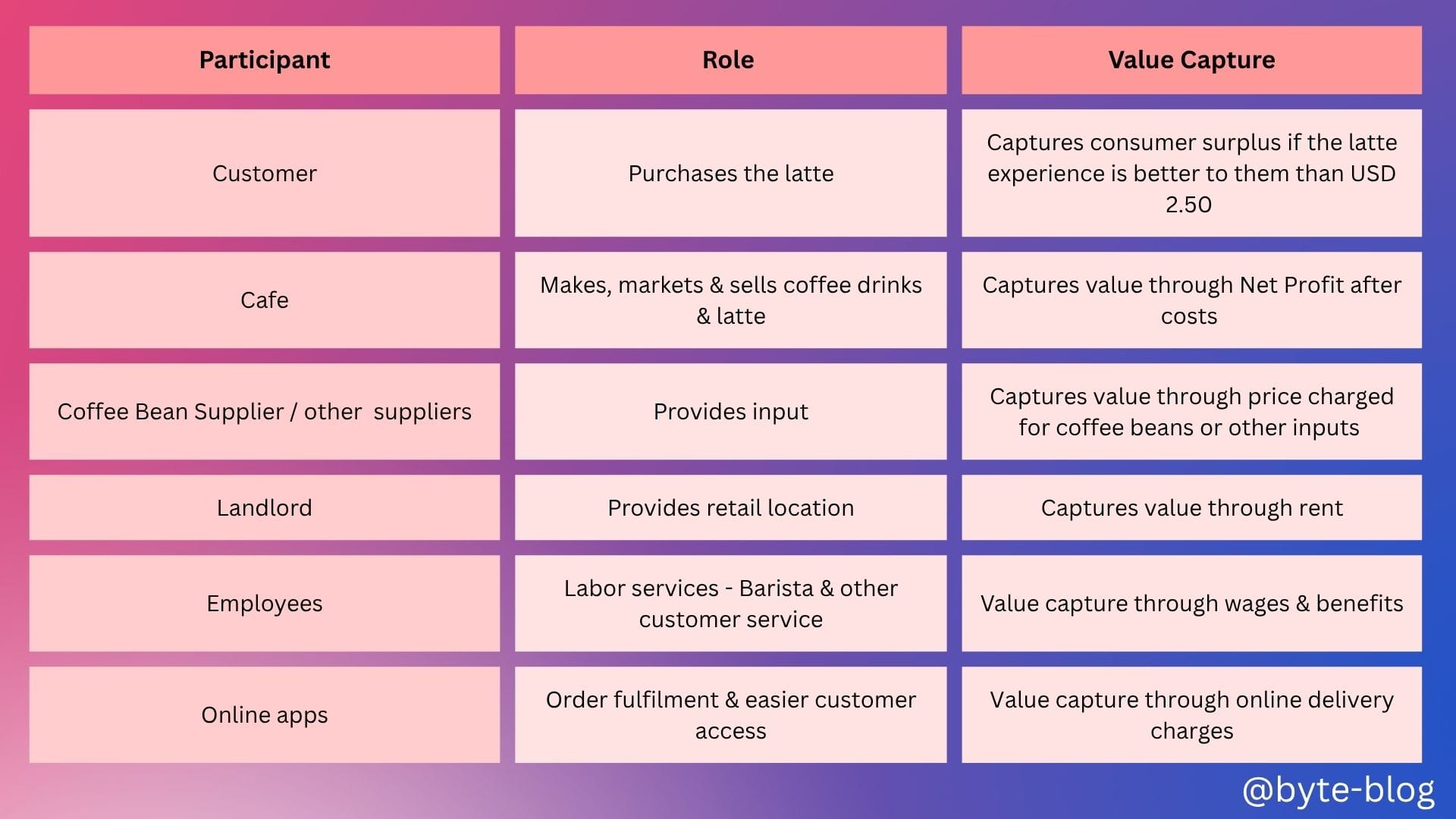
Now, let us apply Five Forces to each of the above players to see how their value capture is impacted by these forces :
Five Forces vs. Value Capture
- Rivalry among coffee shops
If there are other cafes close to each other or in the same locality, each may reduce prices, offer discounts or spend heavily on advertising to get new business or customers.
Thus, value gets competed away. Customers gain through lower prices or better service, while individual cafe owners capture less profit. Higher competition usually lowers industry profitability. The other prominent example is the Airlines industry. - Buyer power
If customers can easily switch between cafes, compare prices online etc., buyers have substantial power. They can choose the cafe with the cheapest latte, higher reward points, fastest service, or better promotions.
In this case, customers capture more value because cafes must offer lower prices, better quality, larger portions, faster delivery etc to win customers. Buyer power can reduce firm margins by forcing prices down and/or raising the cost of service. - Supplier power
Let us assume a coffee bean roaster supplies distinctive, ethically sourced beans that has high demand, and only a small number of roasters can meet the required quality and certification standards. The roaster can raise its wholesale prices or impose less favorable supply terms to cafe owners.
In this case, the supplier captures more value by charging higher prices for coffee bean inputs while the coffee shop’s margin falls unless it passes the higher cost on to customers. - Threat of new entrants
If entry barriers for opening cafes are low, new cafes can enter whenever the industry appears profitable.
In this case, the prospect of new entrants prevents established cafes from sustaining excessive prices or margins. New entry increases supply and intensifies rivalry, shifting value away from incumbent coffee shops and toward customers. - Threat of substitutes
Customers do not necessarily need a latte from cafes all the time. They can make coffee at home, use office coffee machines, choose other drinks etc.
In this case, strong substitutes cap the price a cafe can charge. If a latte becomes too expensive, customers can switch to other means; hence, the cafe cannot capture all the value it creates. The customer and substitute providers gain negotiating leverage.
Thus, the interplay of Five Forces between industry participants impact value capture by each of them.
As per the Economic Research Working Paper No. 39 by World Intellectual Property Organization,
- Most of the USD 200 billion value that coffee generates globally accrues to brands, retailers, and supply chain operators
- In comparison, the export value received by coffee-producing countries was stated to be less than 10% of total industry value.
- Many small farmers earn a far smaller percentage of the price paid by consumers. The difference can be accounted for, partly in the asymmetry of power evident in a market driven value chain governance and with the ability to create and market intangible value, associated with brands or retail experience at the consumer end of the value chain. Thus, most of the value generation and appropriation occurs in mass distribution outlets such as grocery chains, high-end beverage preparation technologies or retail coffee chains
The paper argues that intellectual property, origin differentiation, and direct producer–buyer relationships can increase total sector value and potentially shift a greater proportion of value generated upstream to farmers.
But, how do we visualize profit pools?
